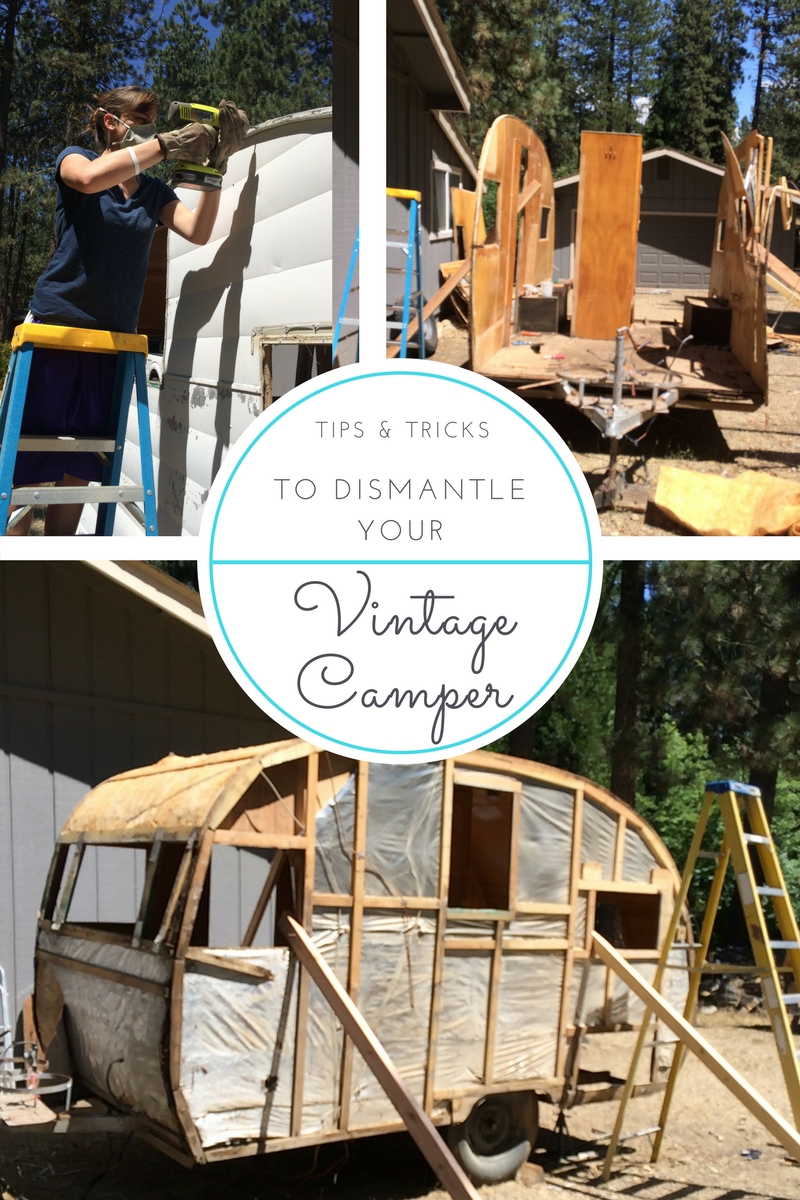
Tips and Tricks to Dismantle Your Vintage Camper

dismantling camper

So, you have to completely rebuild your vintage camper. It can be like pulling a thread on a sweater... The more you tear into it, the further you have to go. I know from experience! Sometimes you just don't know the extent of your project until you start the demolition process.

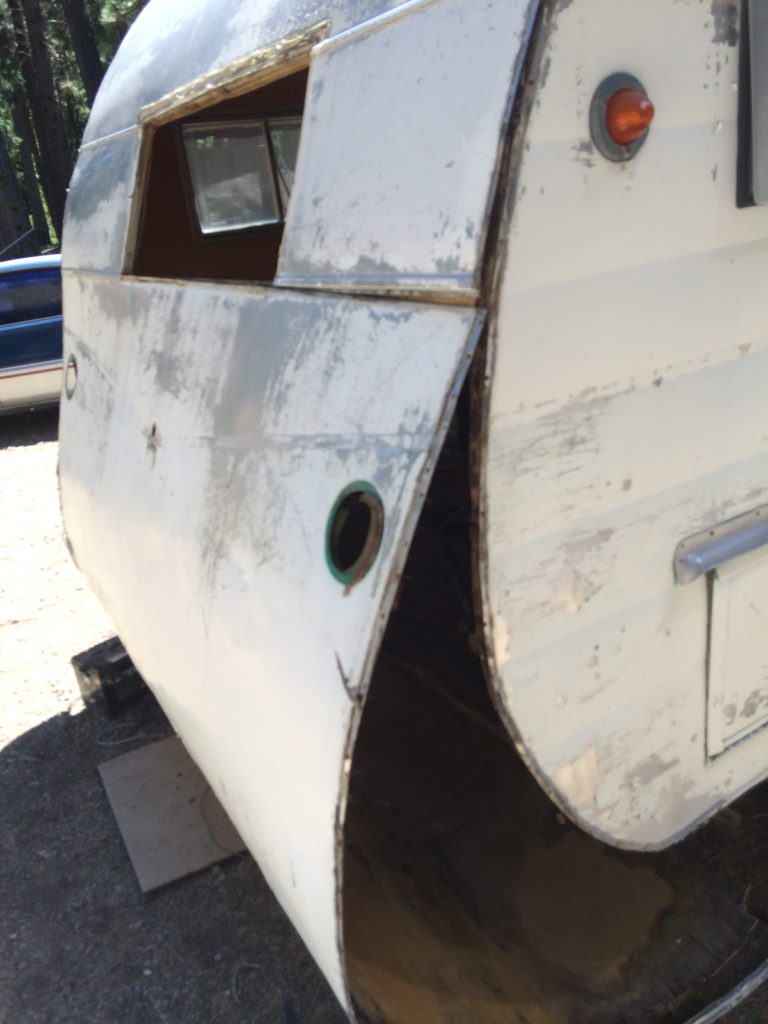
I found out quickly that I was in for a total rebuild when I started the demo process of my vintage 1956 Shasta camper.

I thought I was going to be able to replace some of the sub-floor and the interior paneling.  What I wound up doing was tearing the whole thing apart...down to the trailer frame. The further I dug, the worse she looked, so I went for it!

Here's how I did it;

1. My first bit of advice is to document your project. It's extremely important to take photos. Take lots and LOTS of photos. Take them at every stage of demolition and from every angle.

2. Keep all the parts and pieces for use as templates. The old pieces will also help you to reassemble your camper later. I referred to my camper parts many many times over the course of the project.
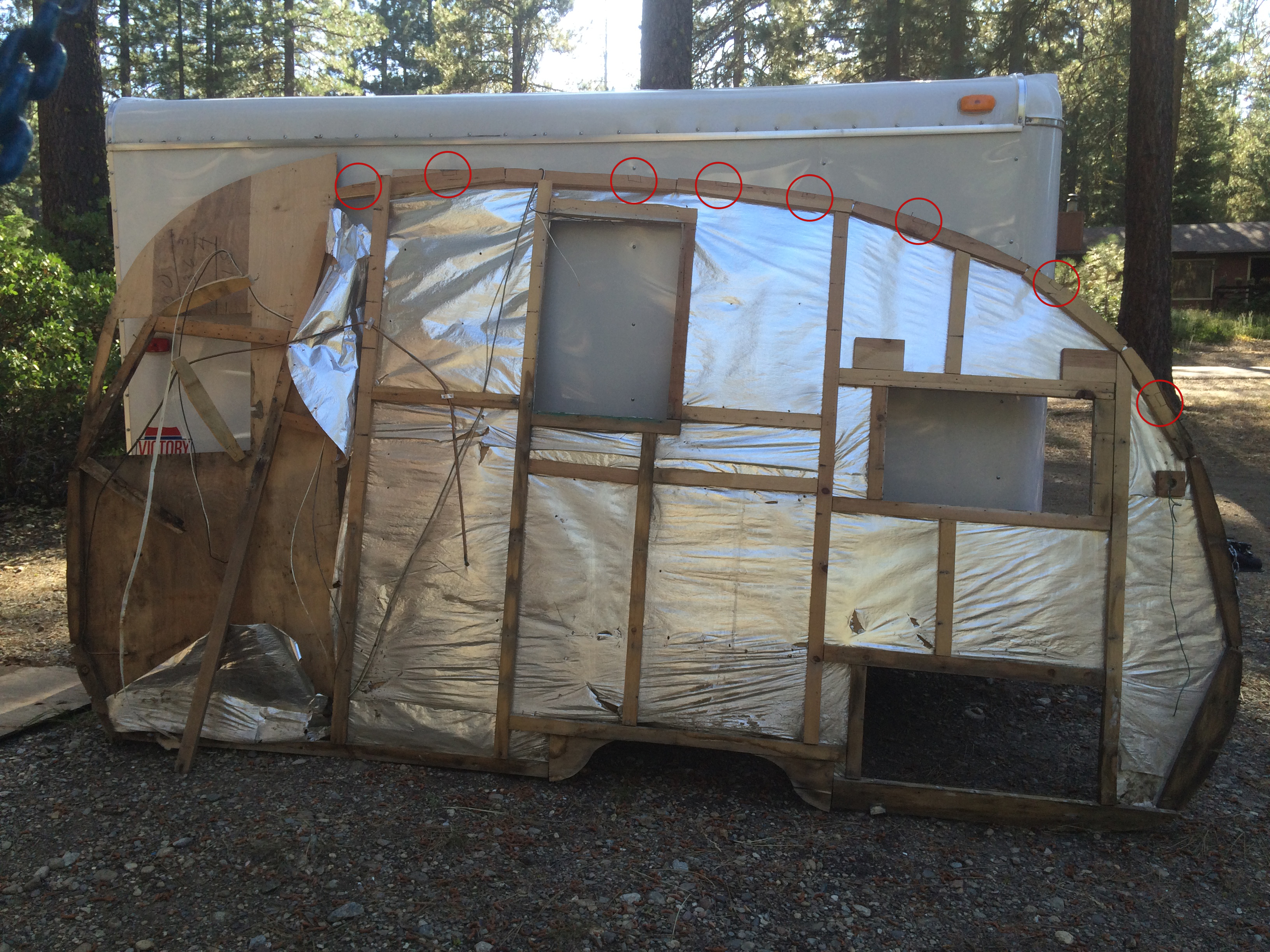
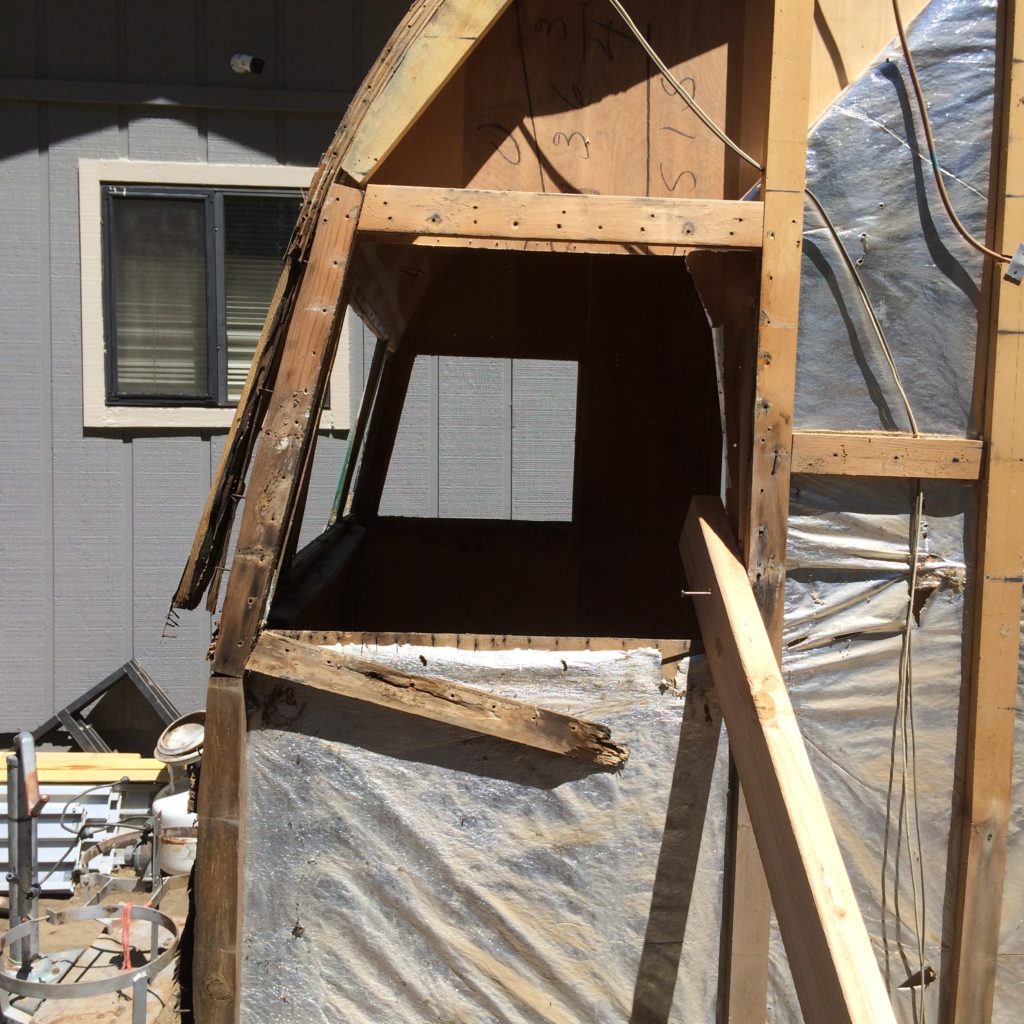
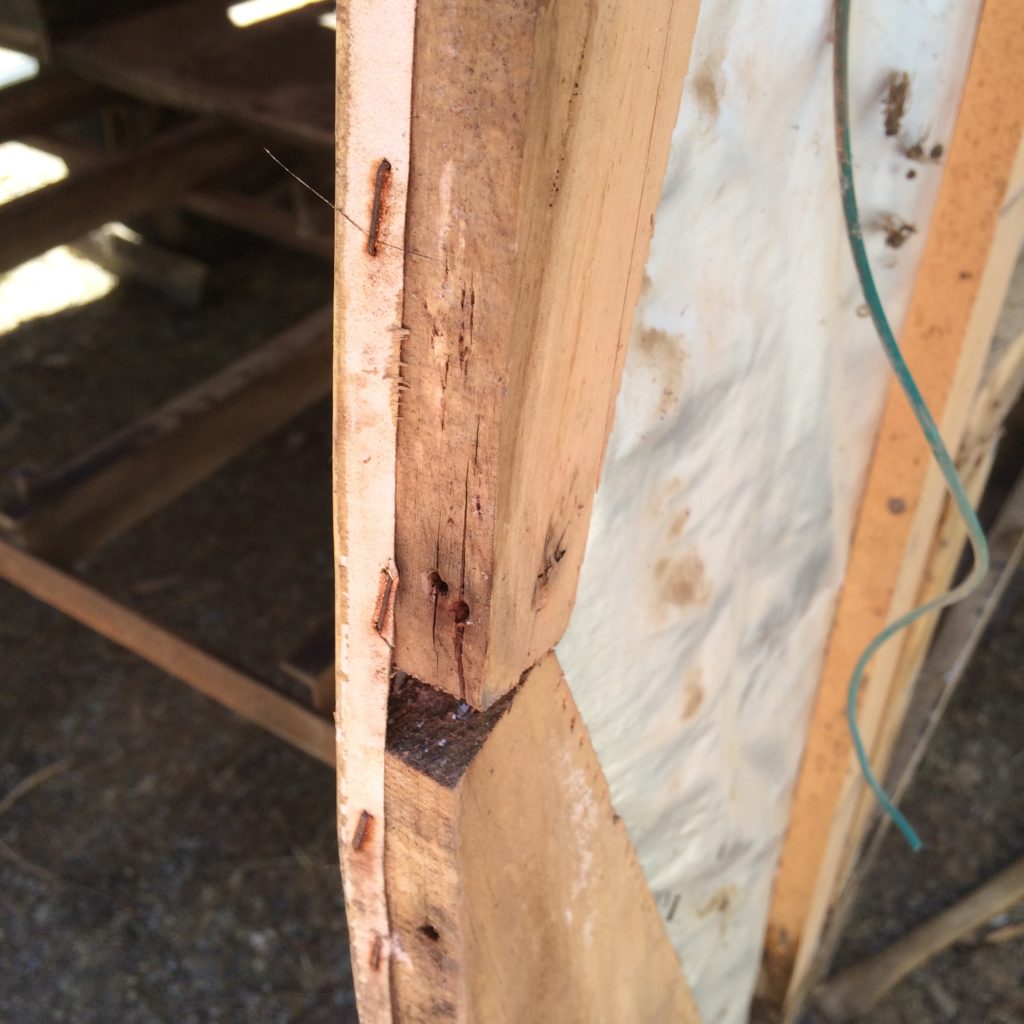
Here you can see that I marked where each rib was located. This will make it easier when reassembling.

Here you can see that I marked where each rib was located. This will make it easier when reassembling.

3. Carefully number and label your parts. I stored all my parts and templates in one place and as I rebuilt the camper I would move the old parts and templates to a separate location.

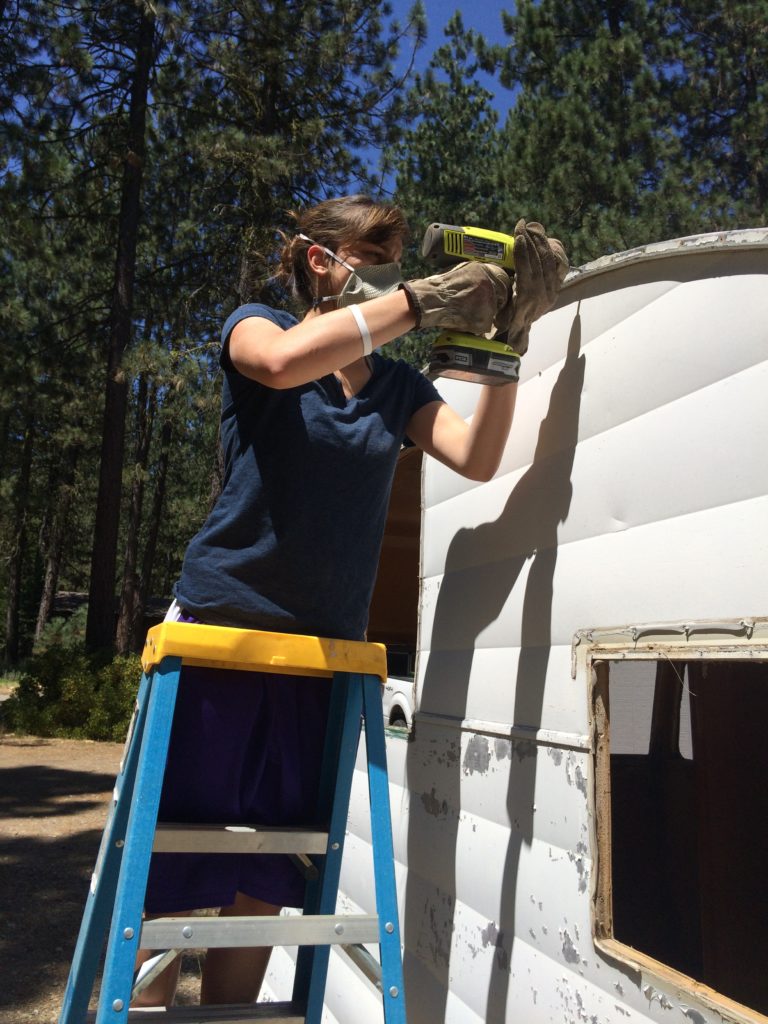
It took over a week to dismantle my camper and I used a variety of tools.

Safety Equipment
Eye protection
Gloves
Respirator

Hand tools
hammer
screwdrivers
vice grips
pliers
wrenches
crowbar

Power tools
Impact drill
drill & drill bits
reciprocating saw

Products I used
PB Blaster


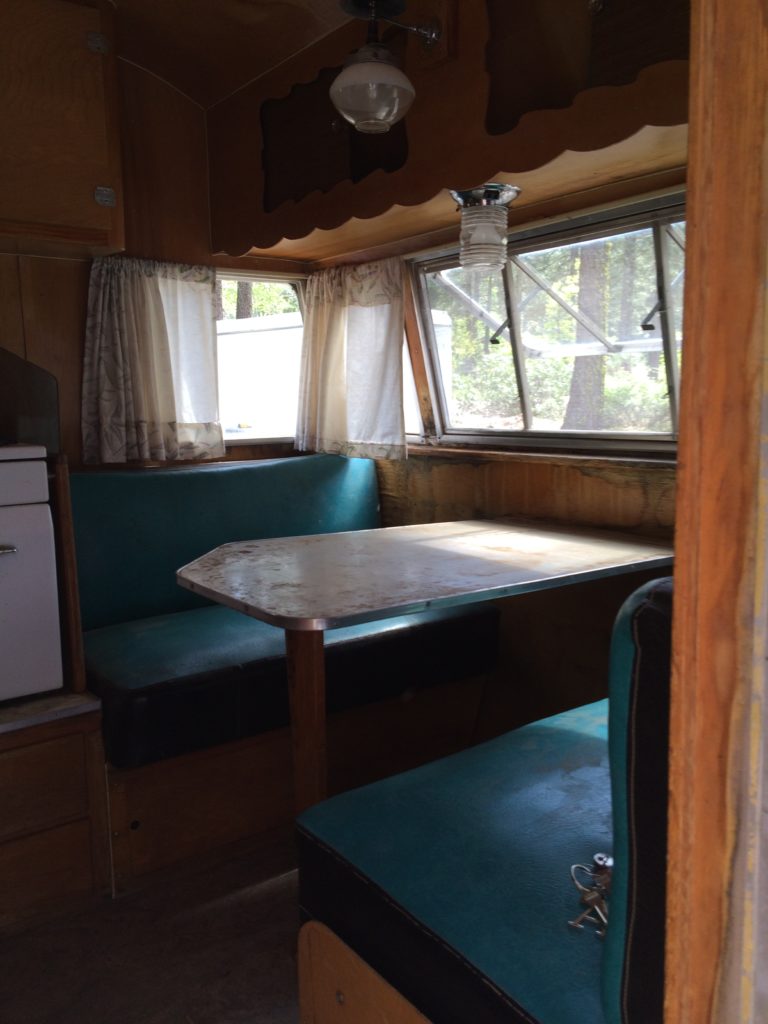
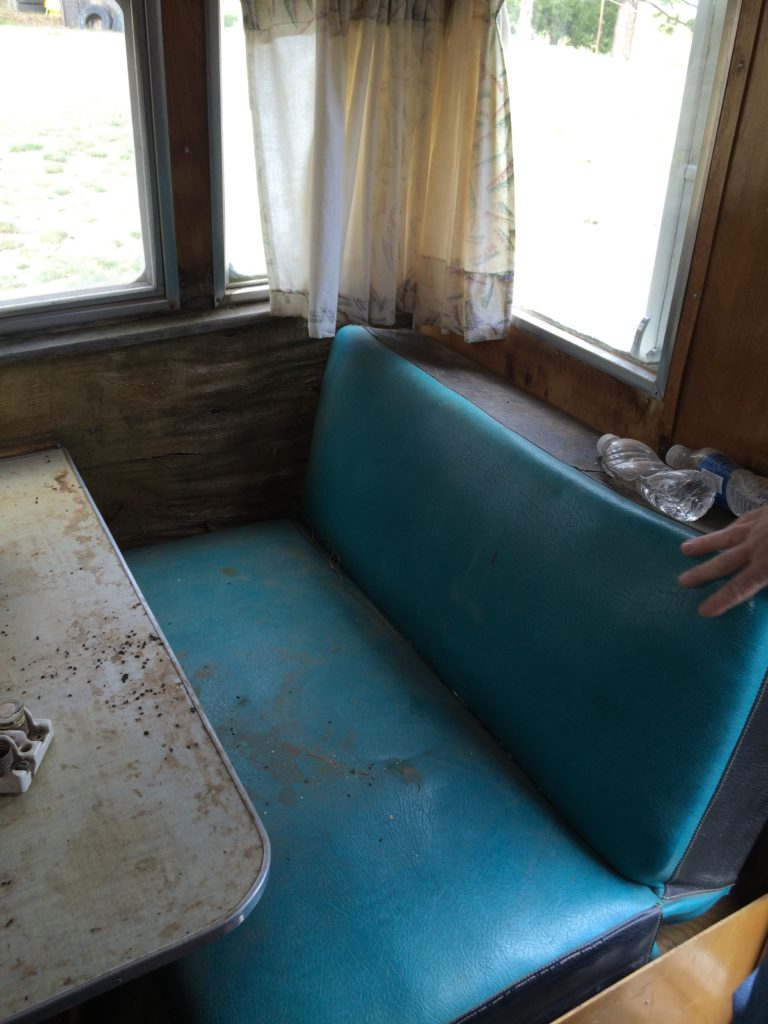
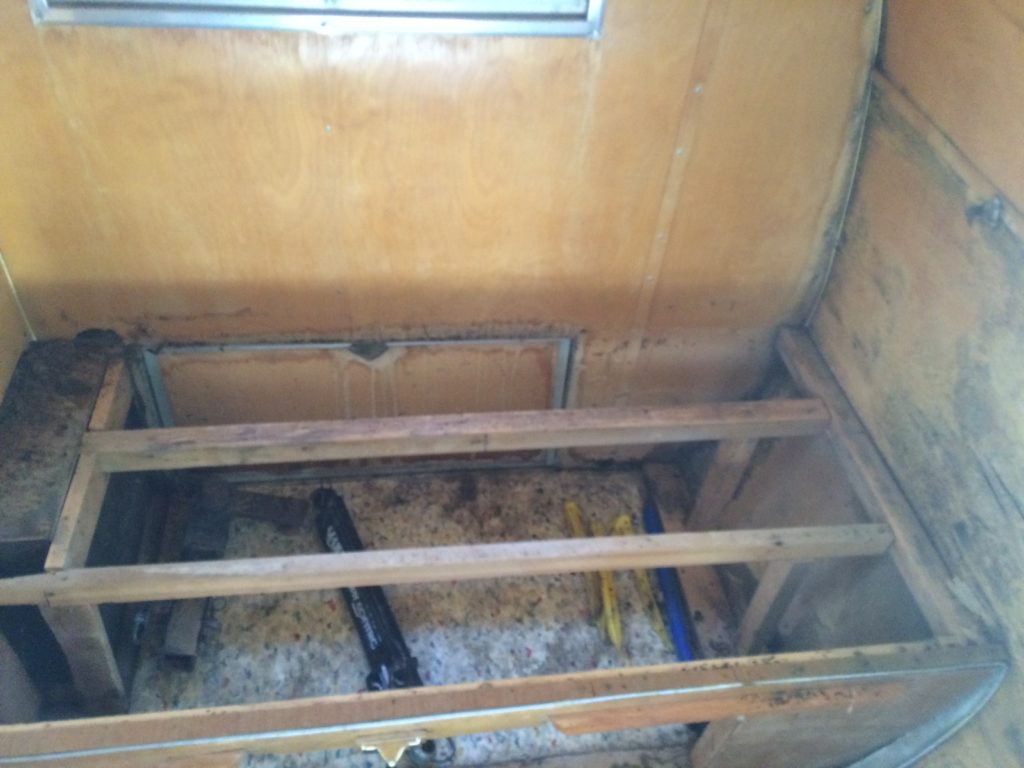
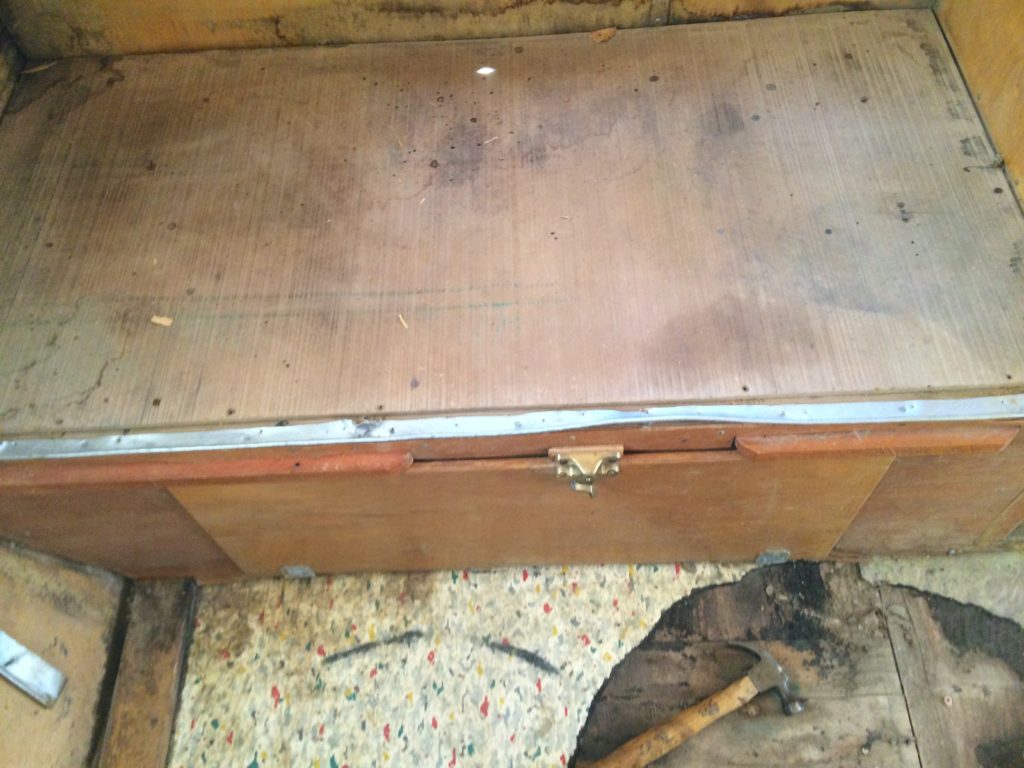
After I cleaned out the camper (see... "How to safely clean out your vintage trailer find."), I removed all of the curtains, rods, table, and seats.

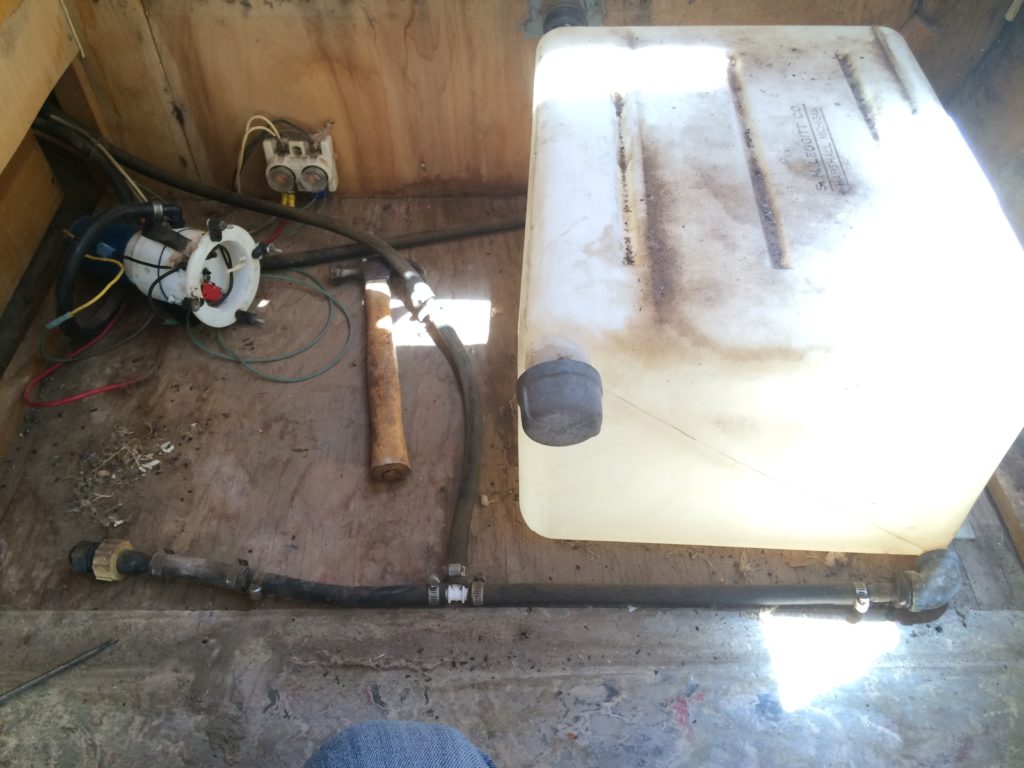
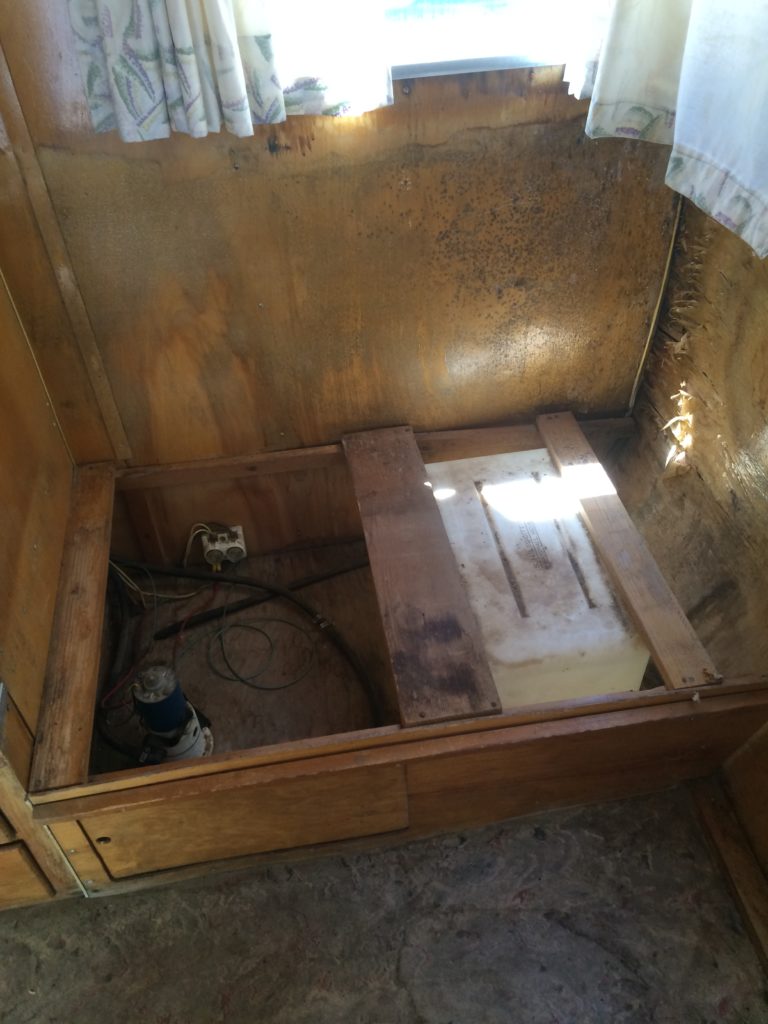
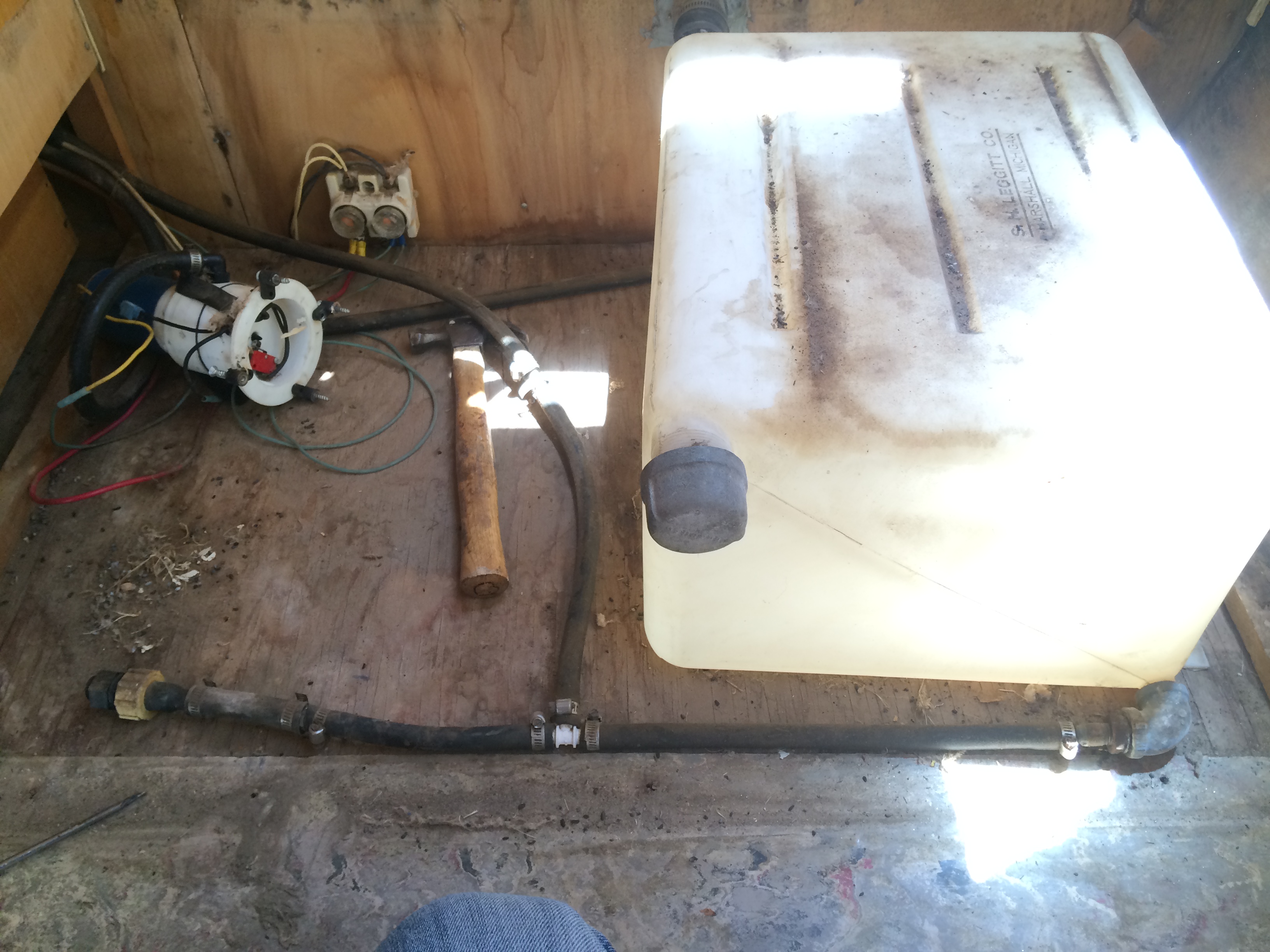
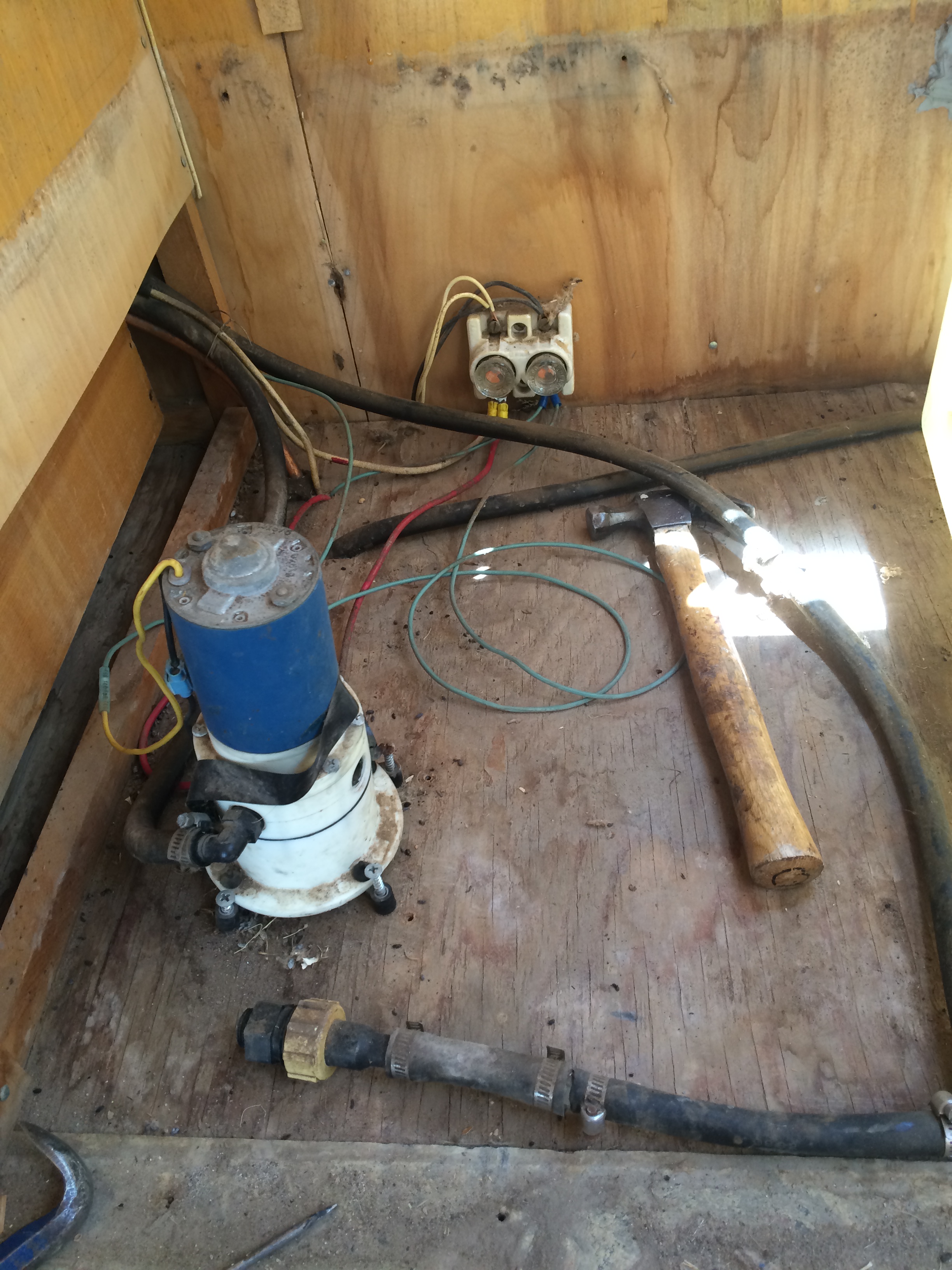
Then I removed the battery, pump, water tank, fuses, and propane tanks. I carefully removed all of the light fixtures, mirror, and exterior lights, wrapping them up for safekeeping. I was lucky enough to have a camper that was complete; all of the fixtures and appliances were intact.

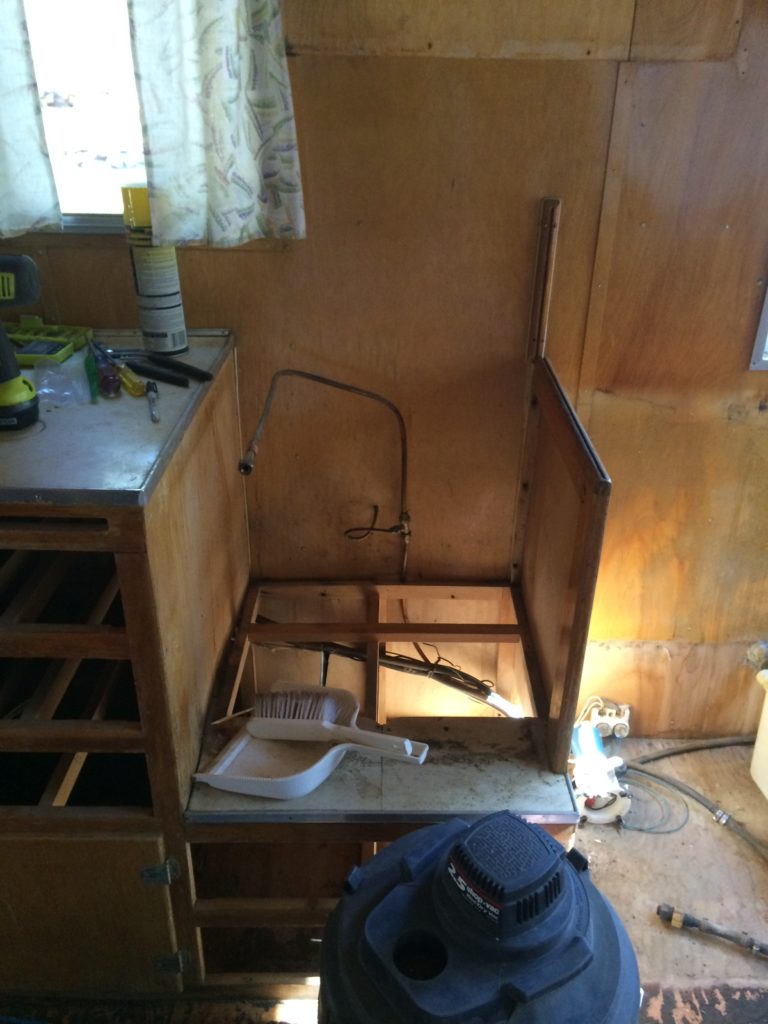
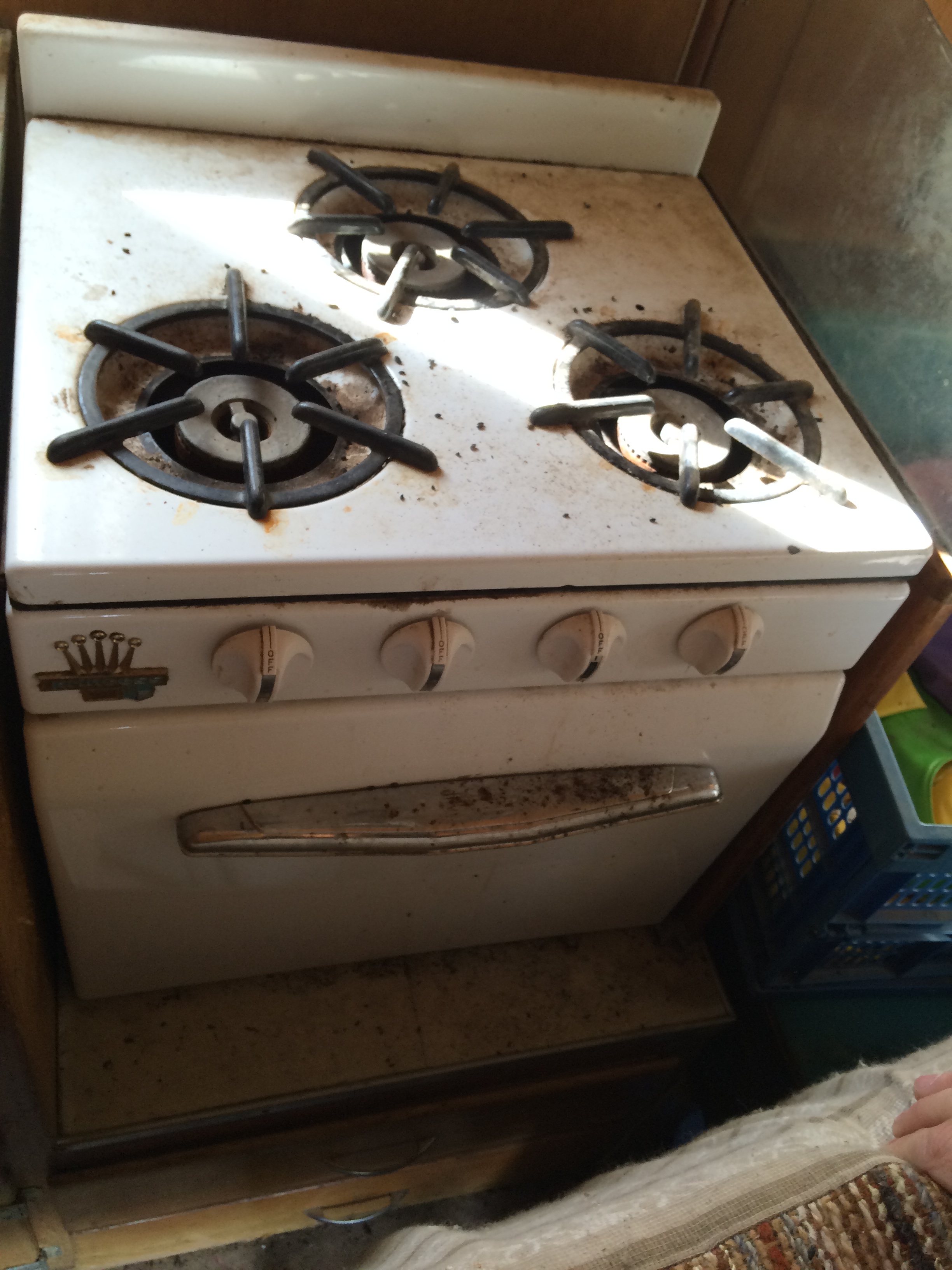
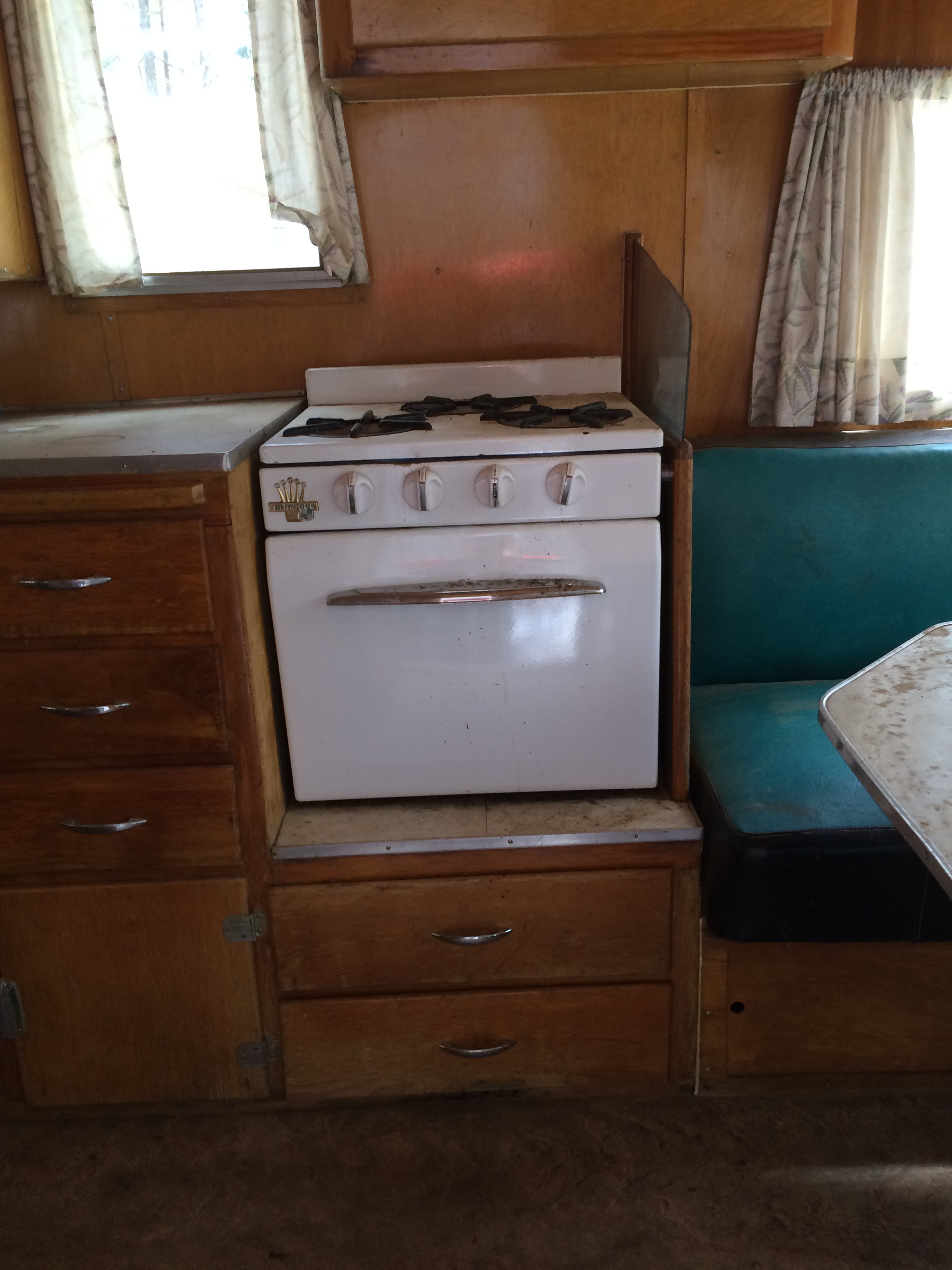
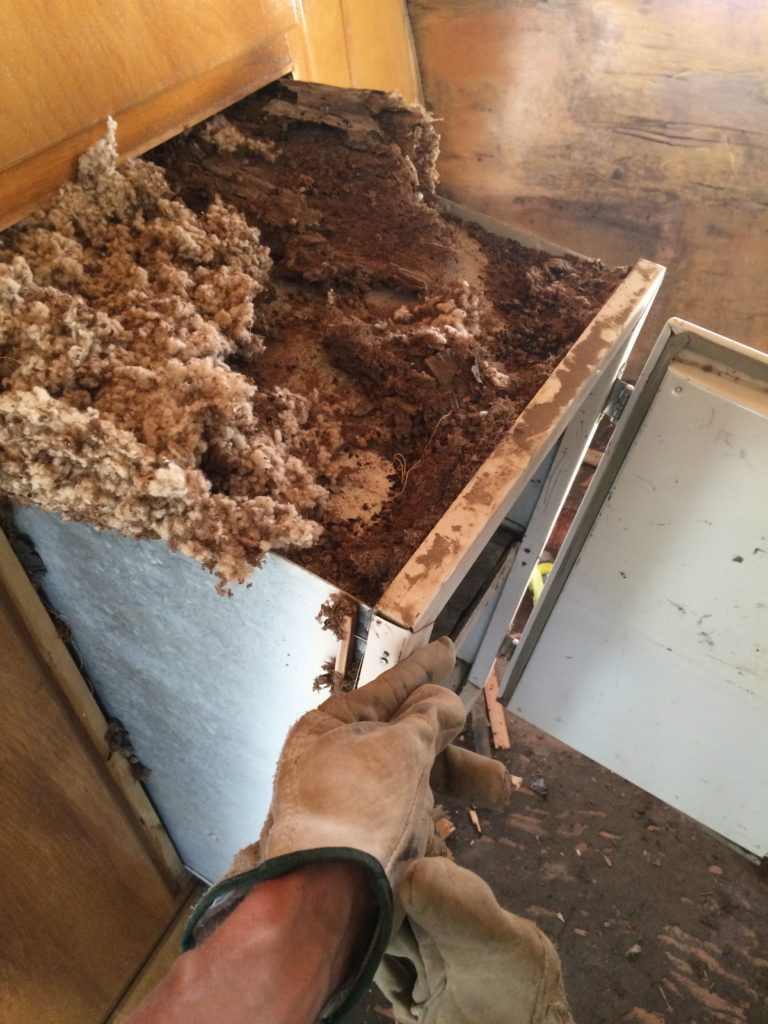
Next was the stove and icebox. The stove looked pretty good but the icebox had a giant mouse nest lodged between the top and the cabinet.  GROSS! I had to use the reciprocating saw to cut the screws that held the icebox in place.
From there I began to unscrew all of the cabinetry.  It was tougher than it sounds because in the 50s they used flat head screws.  UGH!

The dinette and bed bases were mostly built in place, so taking them apart meant that I had to be extremely careful about labeling them.
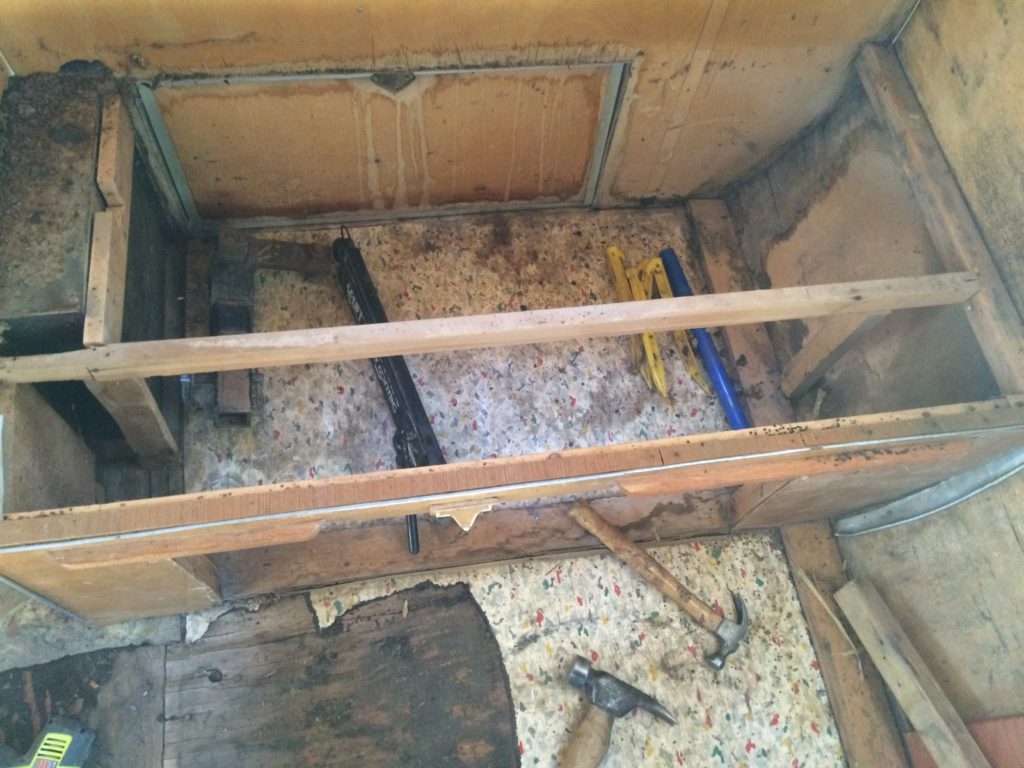
Tip:  When labeling your parts and pieces use the terms "curbside" and "roadside".  Example; "curbside dinette seat base" or "roadside cargo door."  If you use the terms right and left you'll be easily confused...right and left can mean different things depending on which end of the camper you are standing in and which direction you are facing.  (I learned this quickly. lol)

The sink base was next.  All of the water lines and pump were removed as well as the drain line. I was able to get the sink base cabinet out of the narrow door.

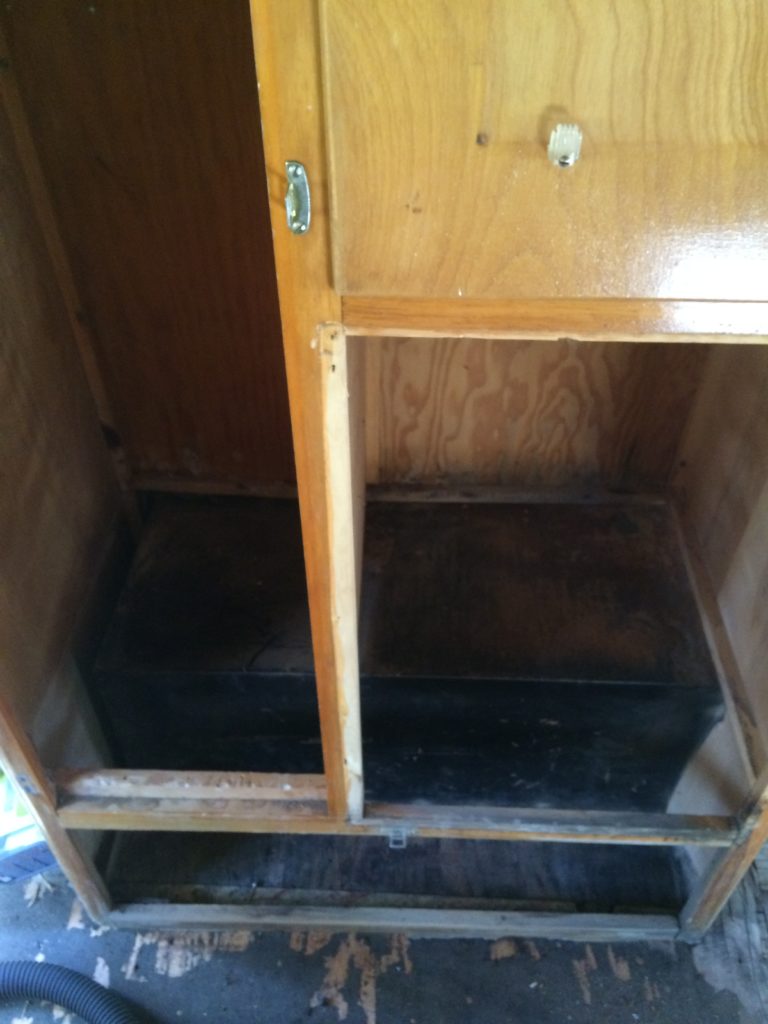
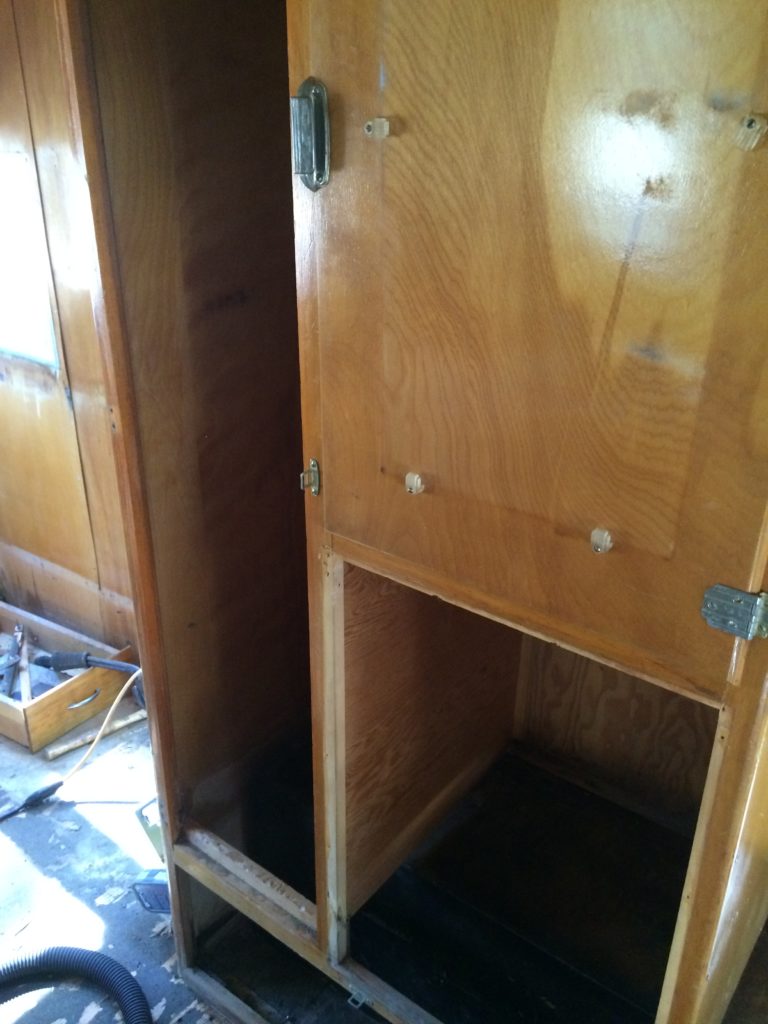
Unfortunately, that isn't the case for the wardrobe cabinet. It has to be removed by taking it out the rear of the camper...which means you have to remove the siding and framing.  Remember that the wardrobe is structural so I don't recommend taking it out until you can brace the walls.

So on the exterior.....

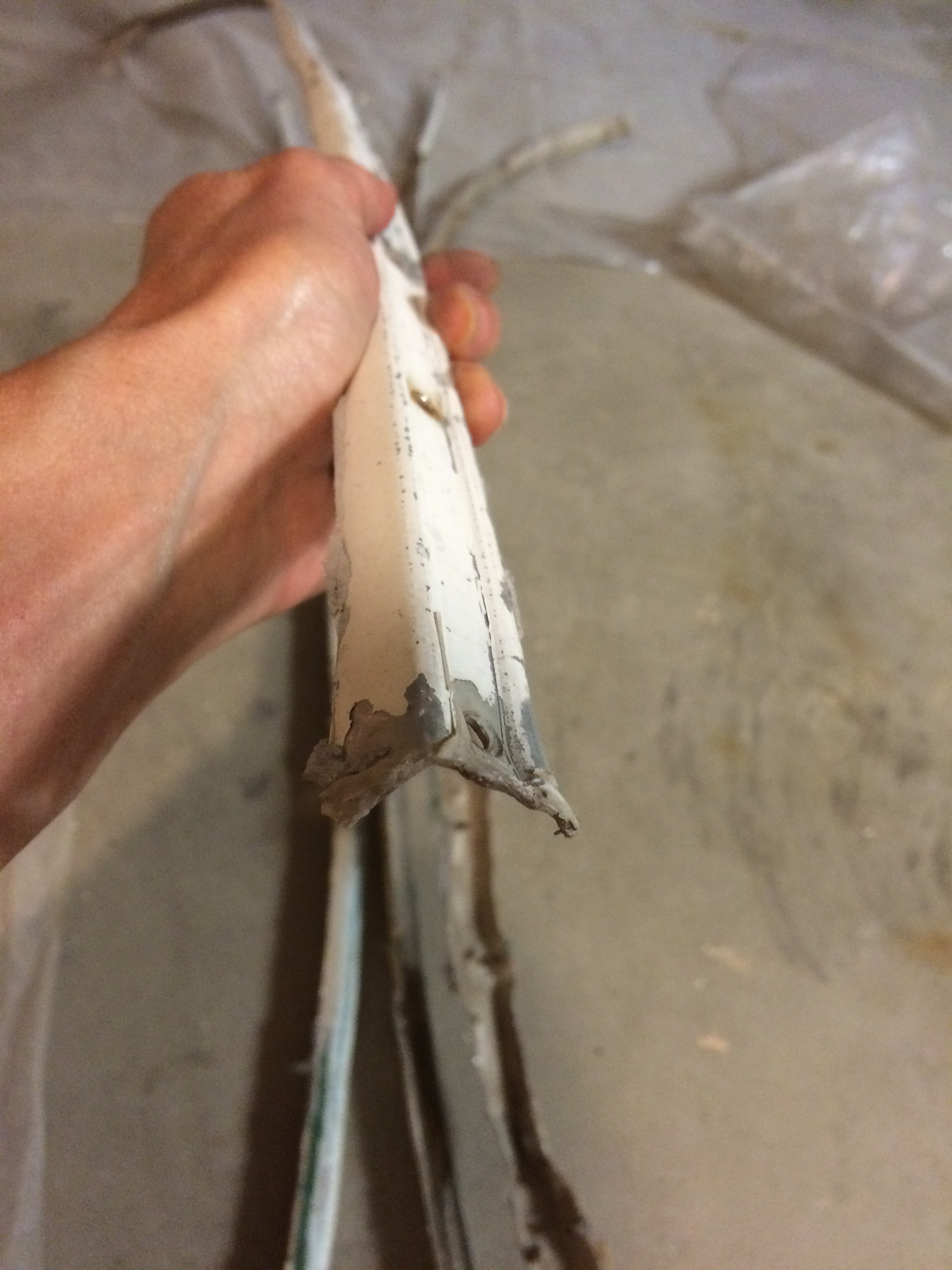
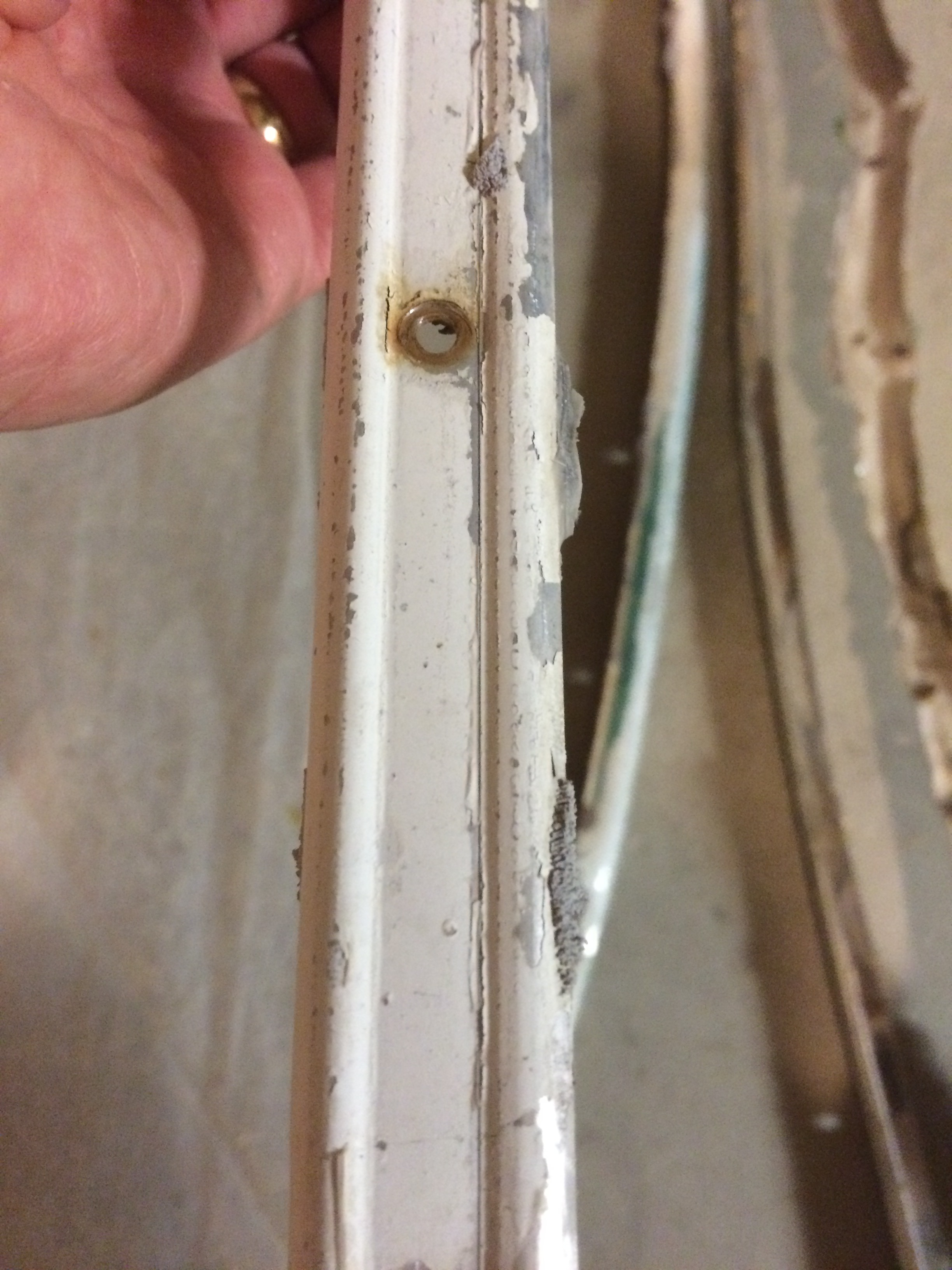
Trim pieces were removed. (hundreds of stainless screws!!!) I ordered new screws from my local Ace Hardware.  I wound up going through at least 8 boxes of 100.

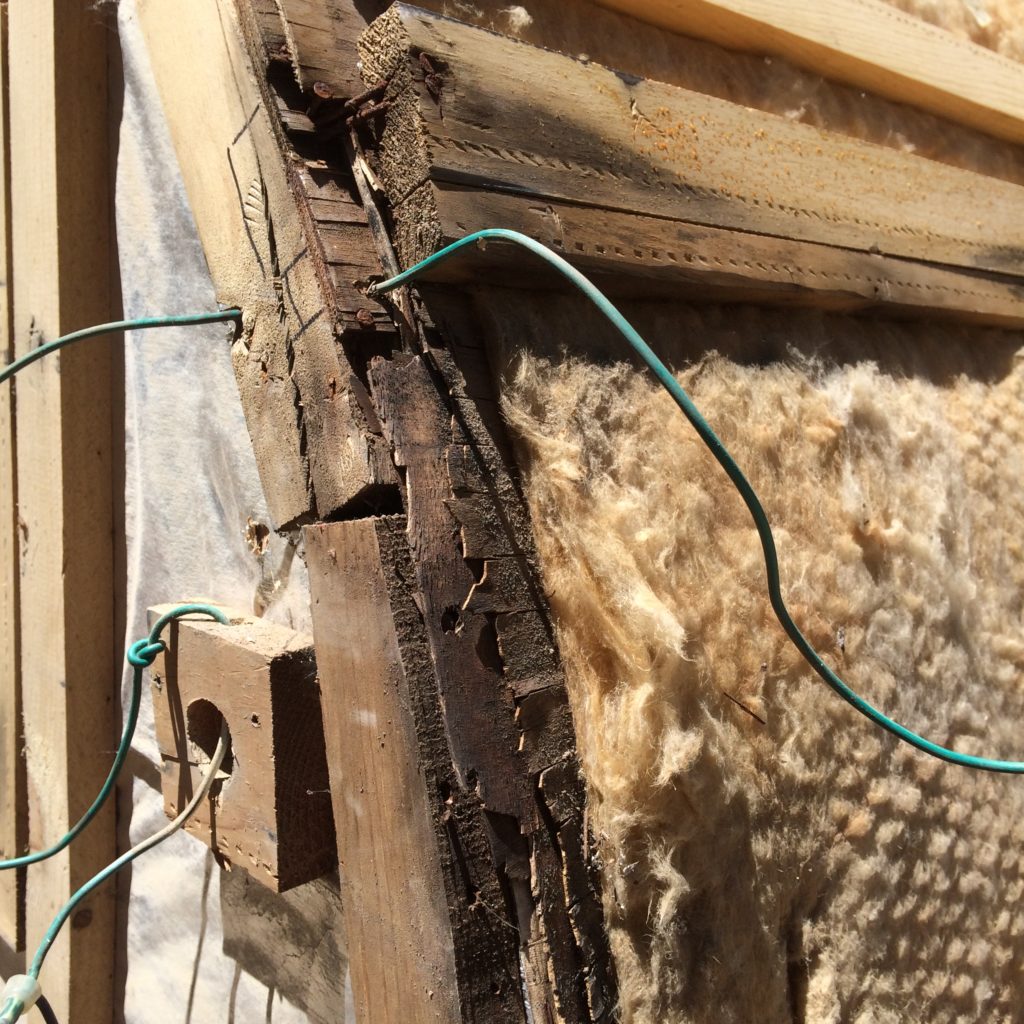
The windows had an interior frame that was screw-nailed in place as well as an exterior frame and glass that was screwed on. Firing strips were used to shim each window frame.  All of that wood was rotten.
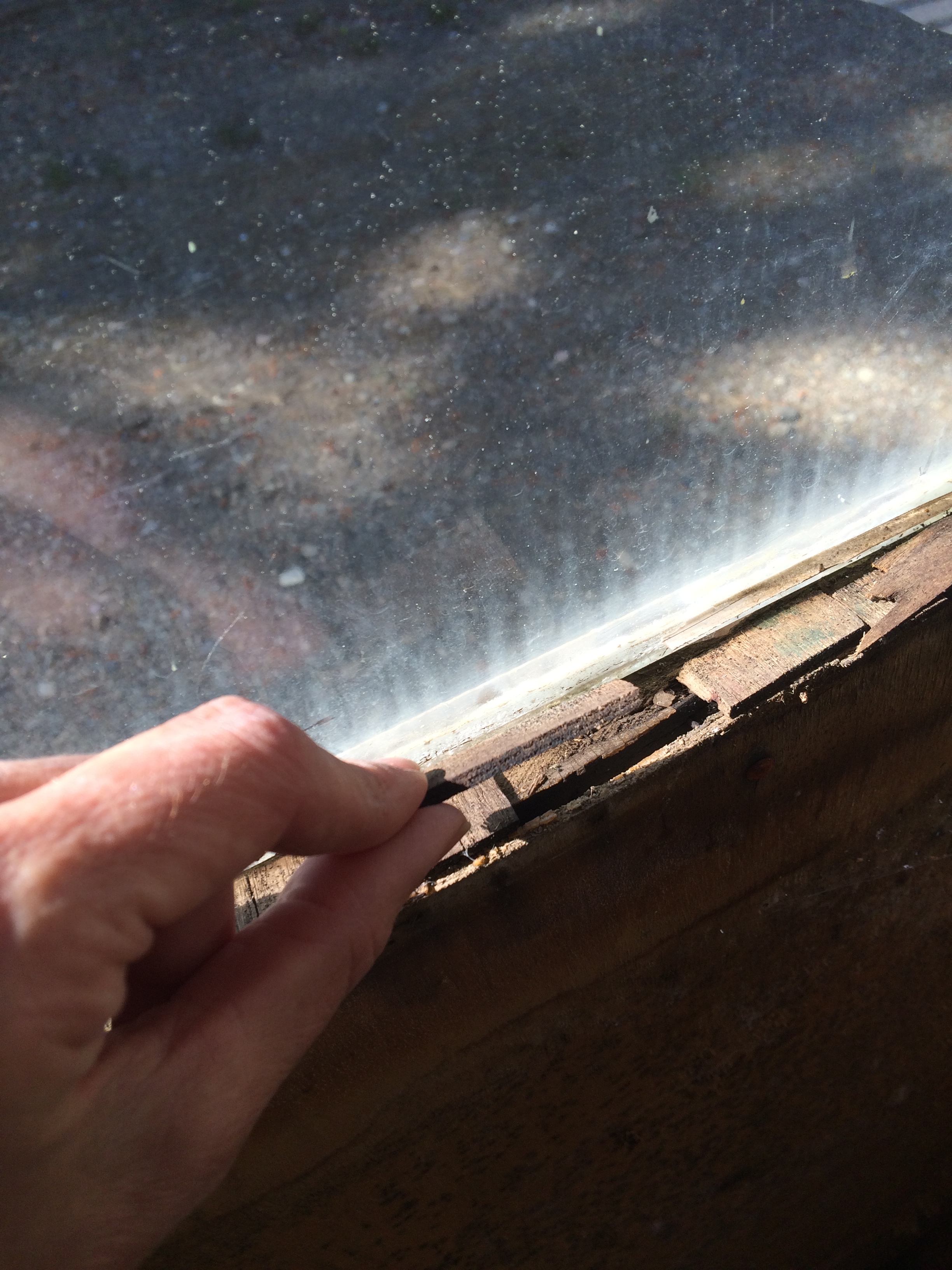
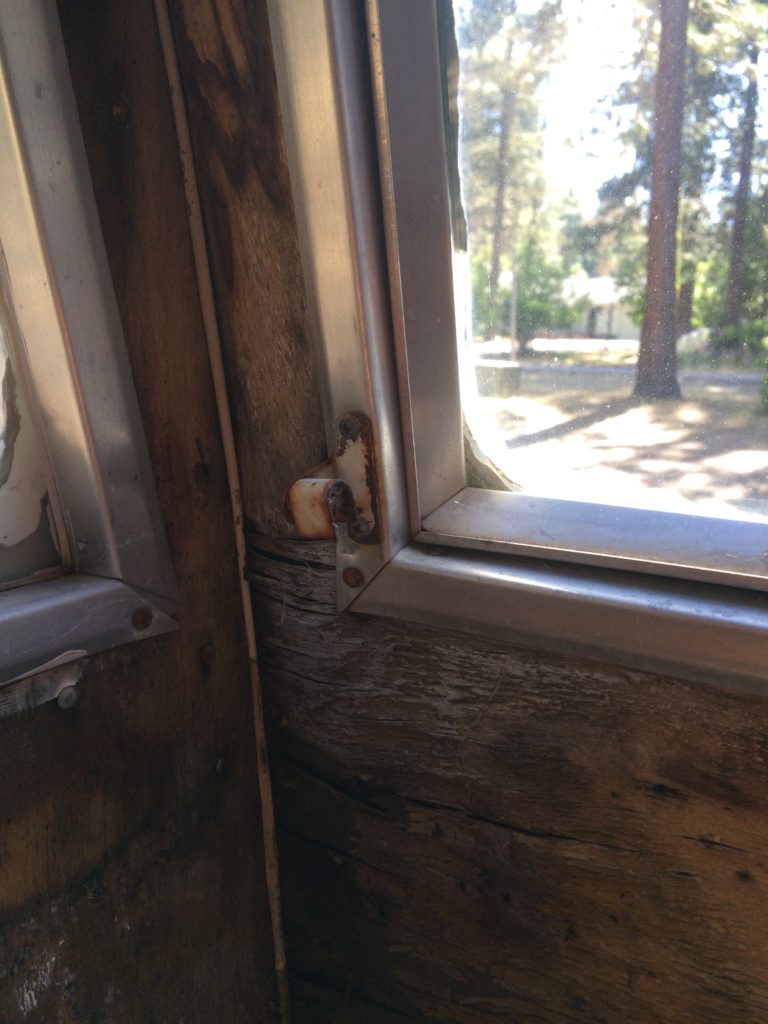
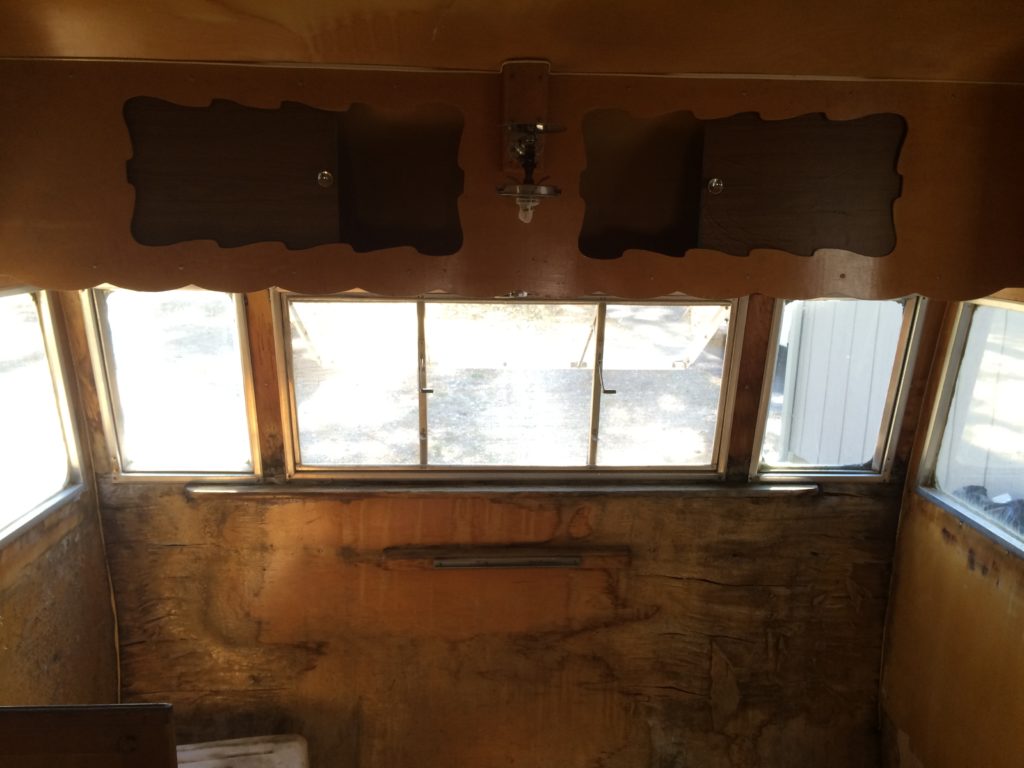
The exception is the front/side windows.  These had the interior aluminum frame but were held in place with wood trim pieces and silicone caulking.  It was as if they were "glued" in place.  Terrible design!  They were destined to leak!  I will add a gasket to these when I rebuild!
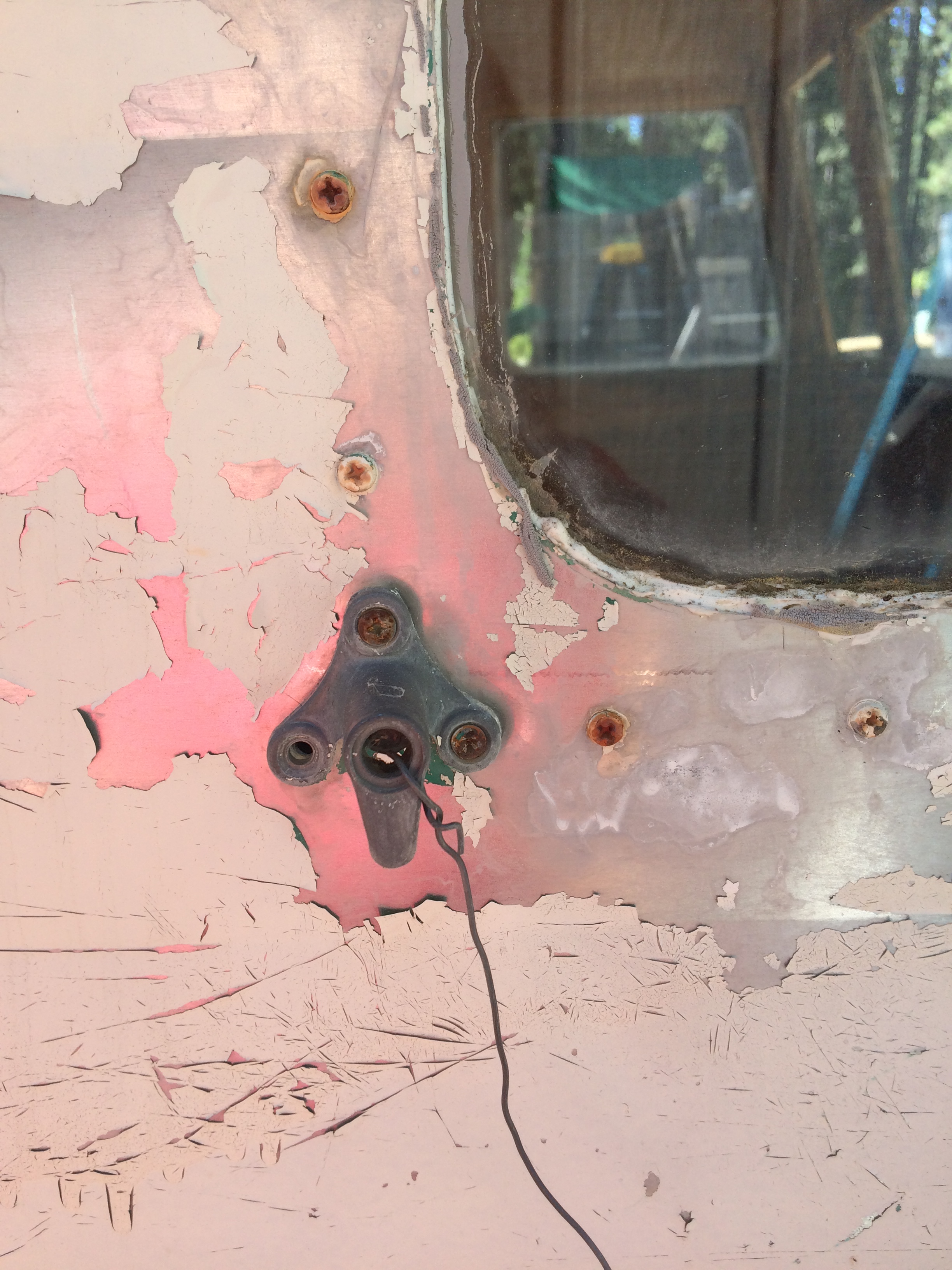
No gasket was present in the front/side windows.

No gasket was present on the front/side windows.

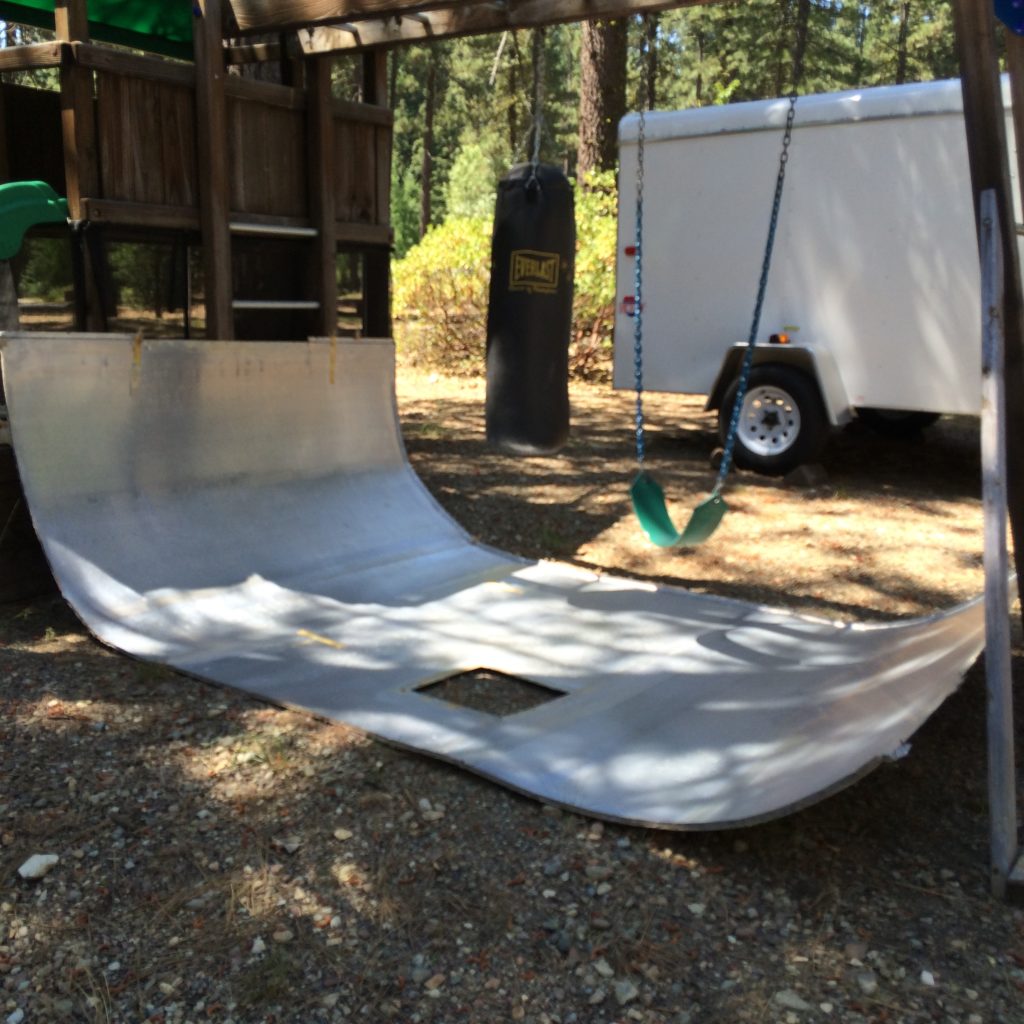
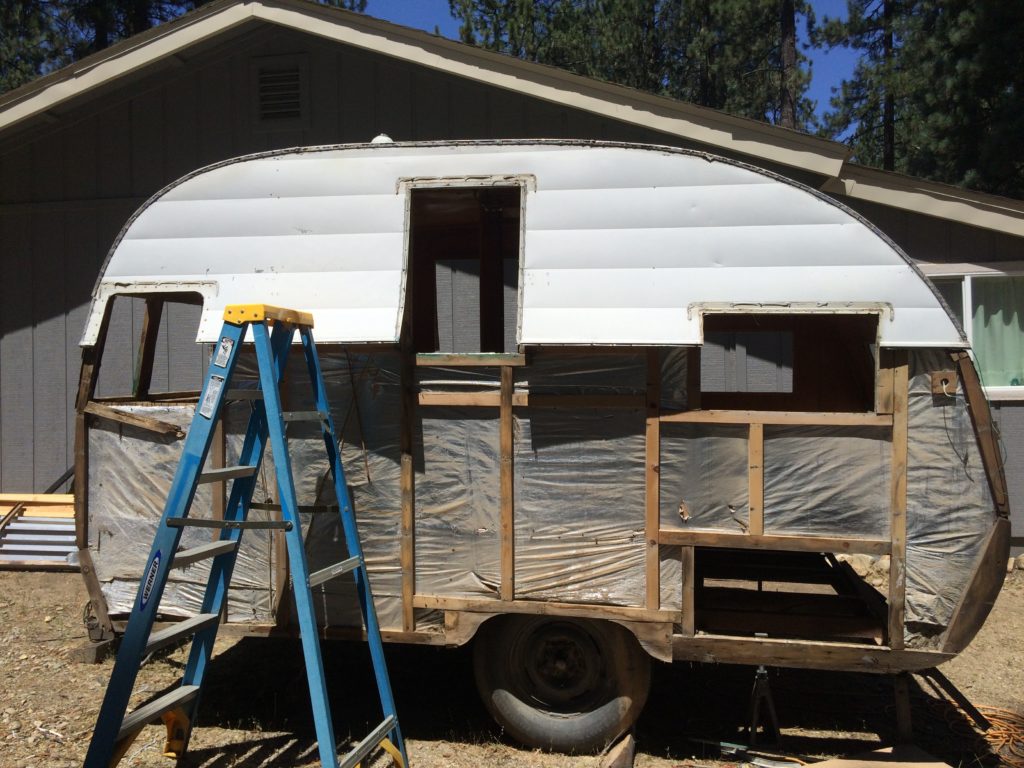
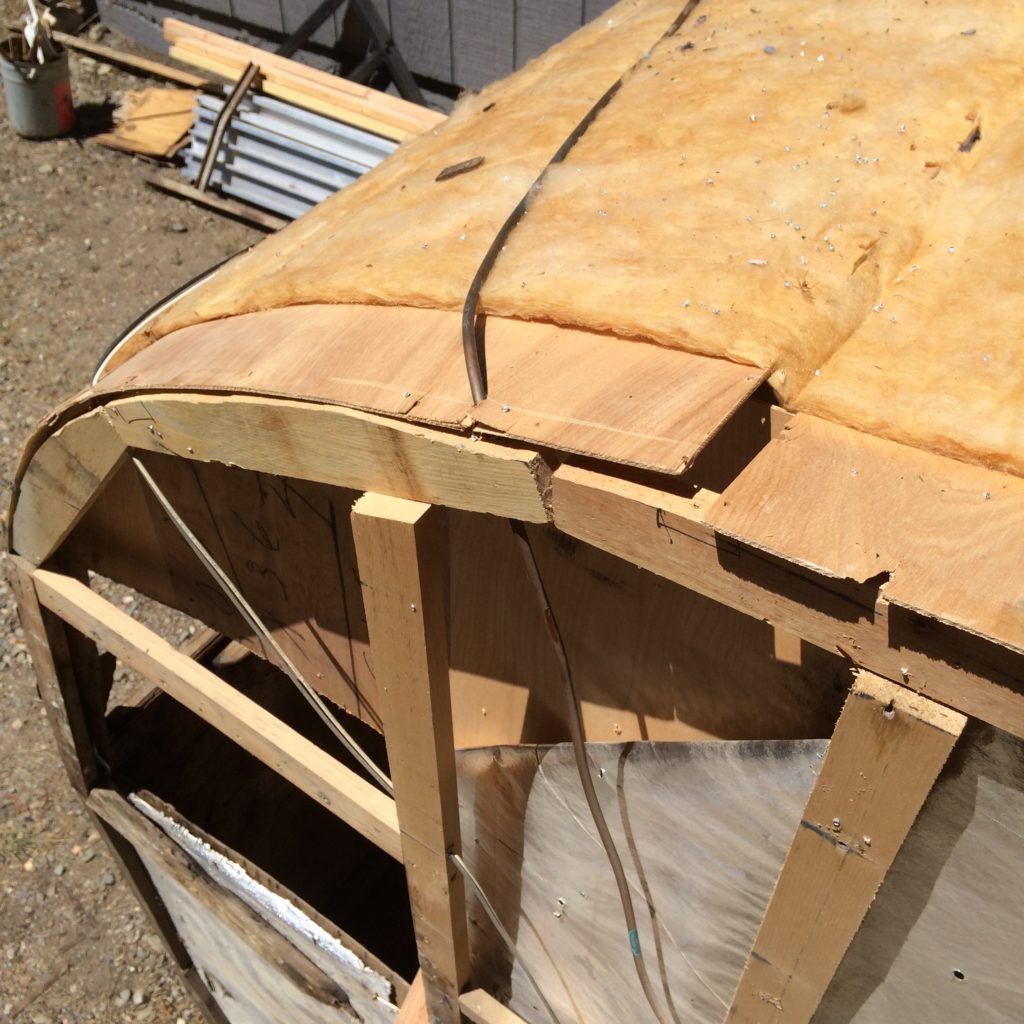
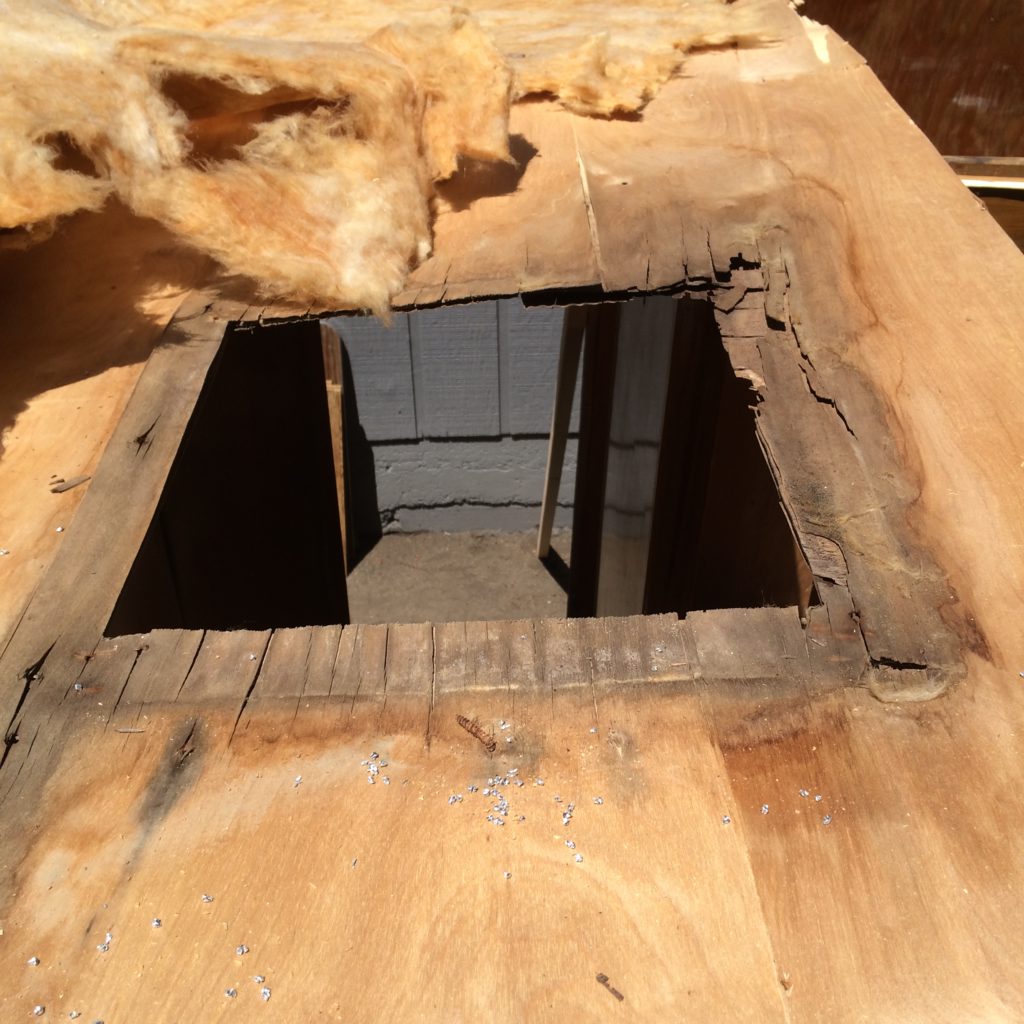
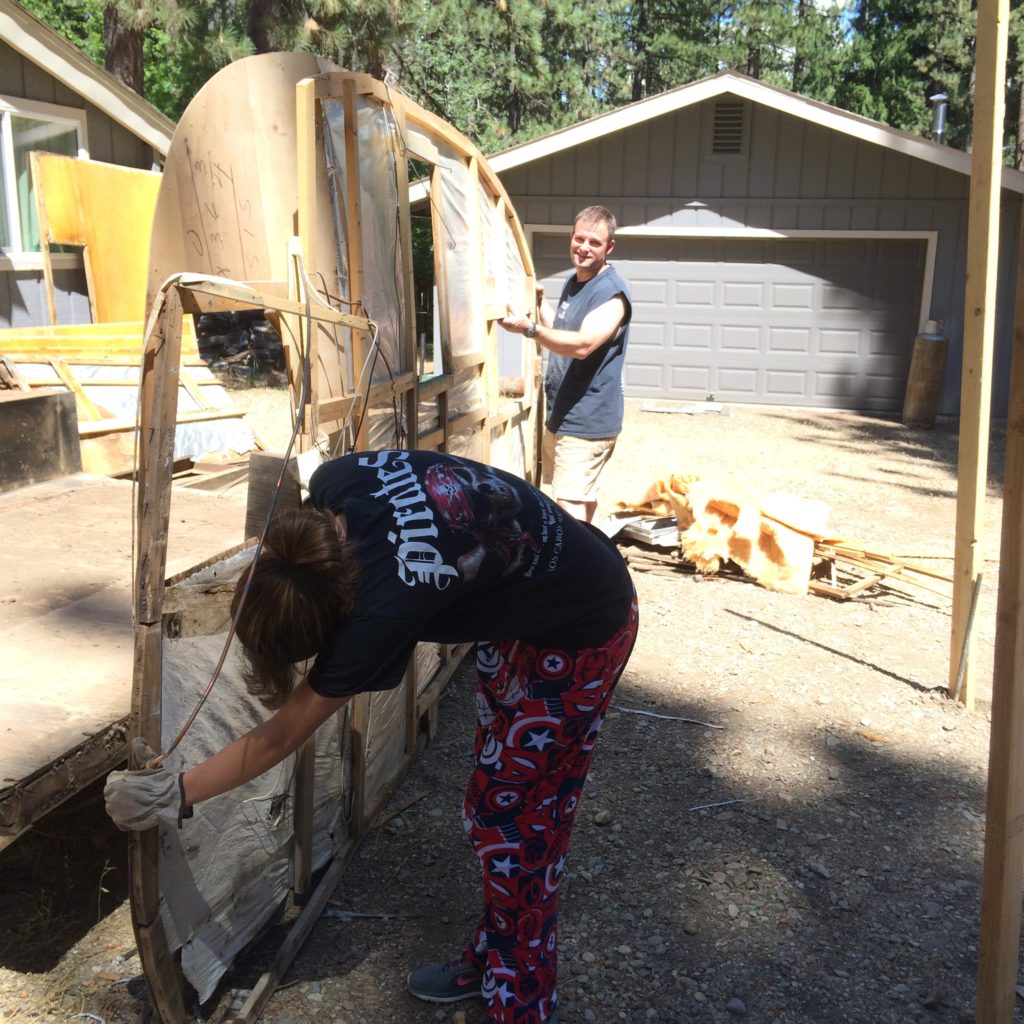
After the windows are out I moved on to the aluminum siding.  I needed some help supporting the large flexible pieces as they came off.  I didn't want to bend or crease them.  The roof was the hardest.  It was such a large piece that it took three of us to support it.

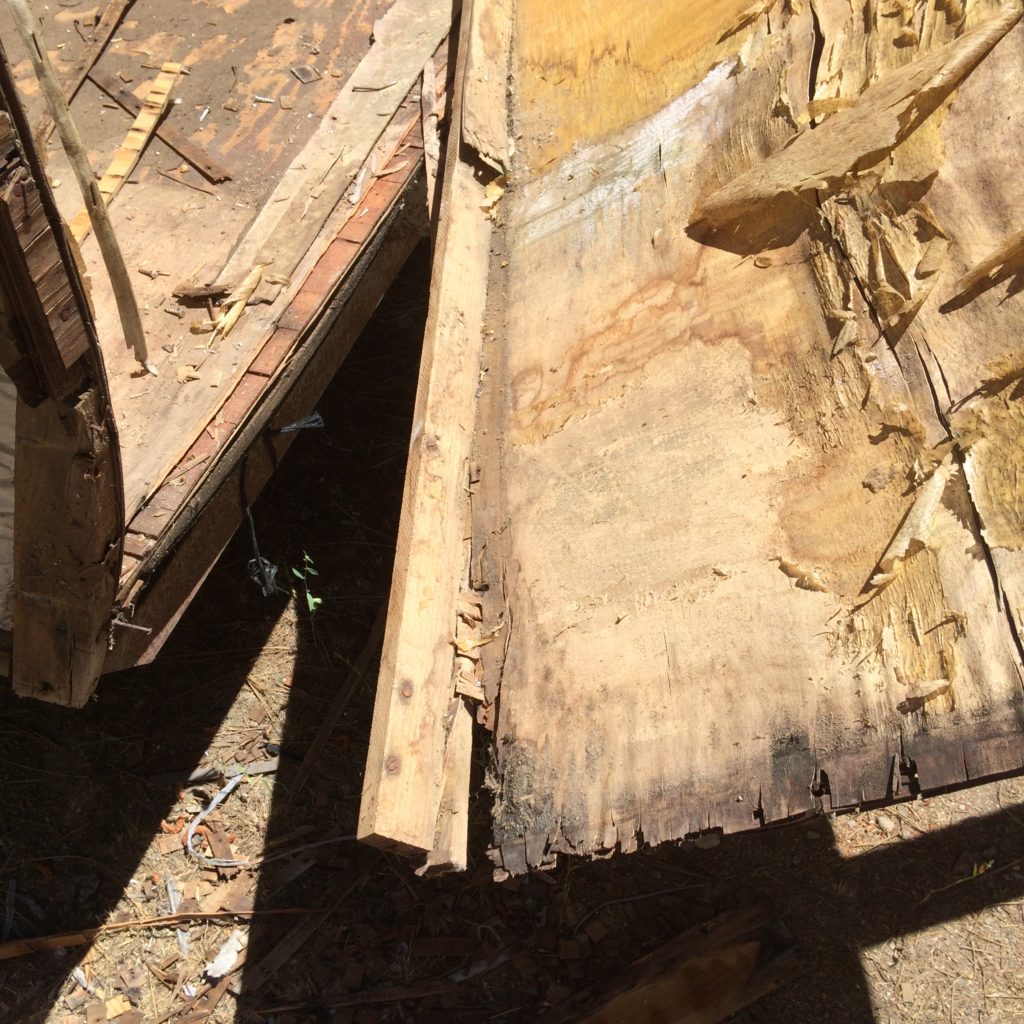
The sub-floor is attached to the trailer frame with large lag bolts.  These were rusted and inaccessible with a reciprocating saw.  I used a product called PB-blaster to loosen them.  Just spray it on, (use goggles) and wait.  Sometimes it takes a couple of hours to really penetrate.
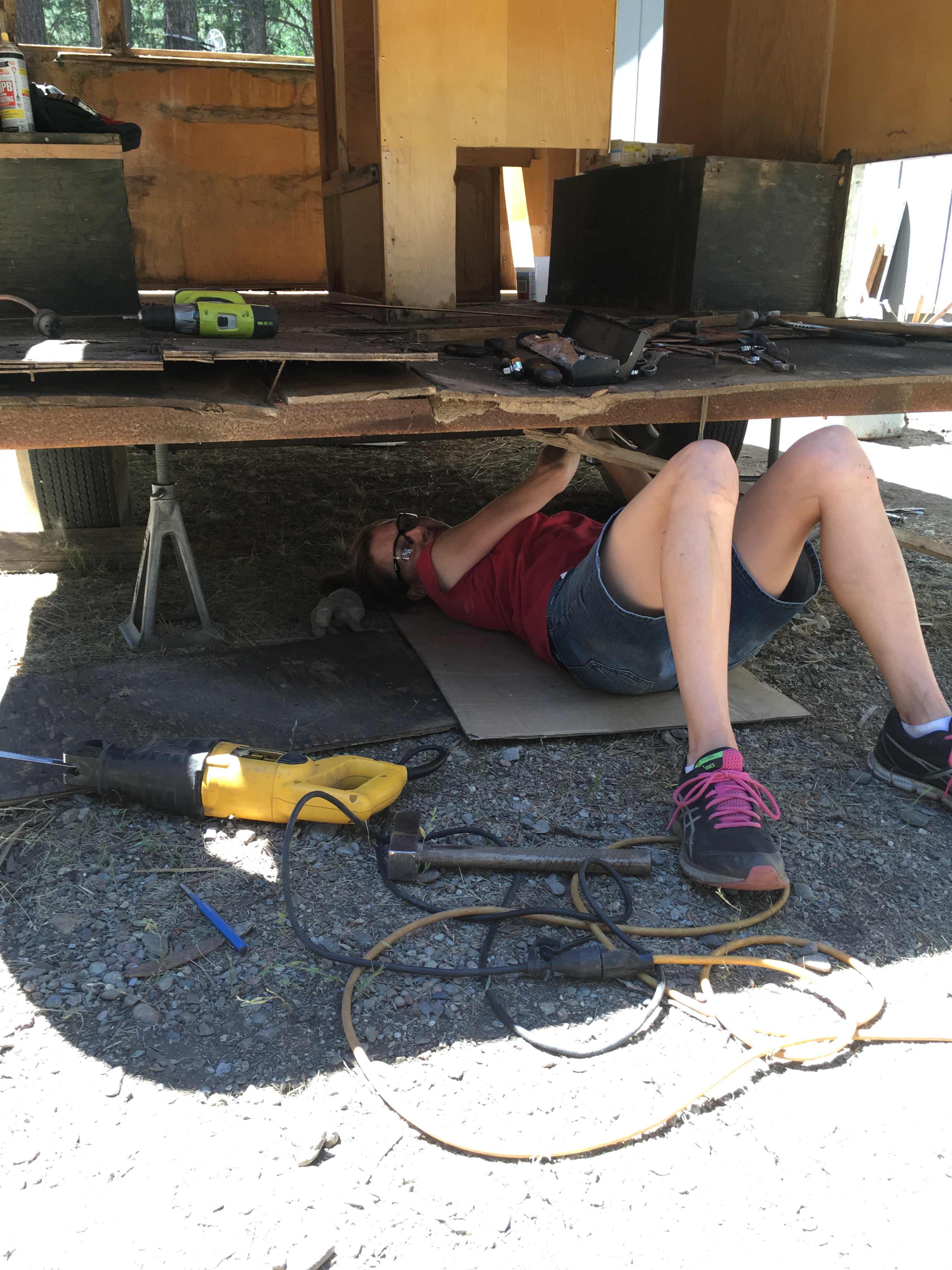
I'm under the trailer removing the sub-floor lag bolts

I'm under the trailer removing the sub-floor lag bolts

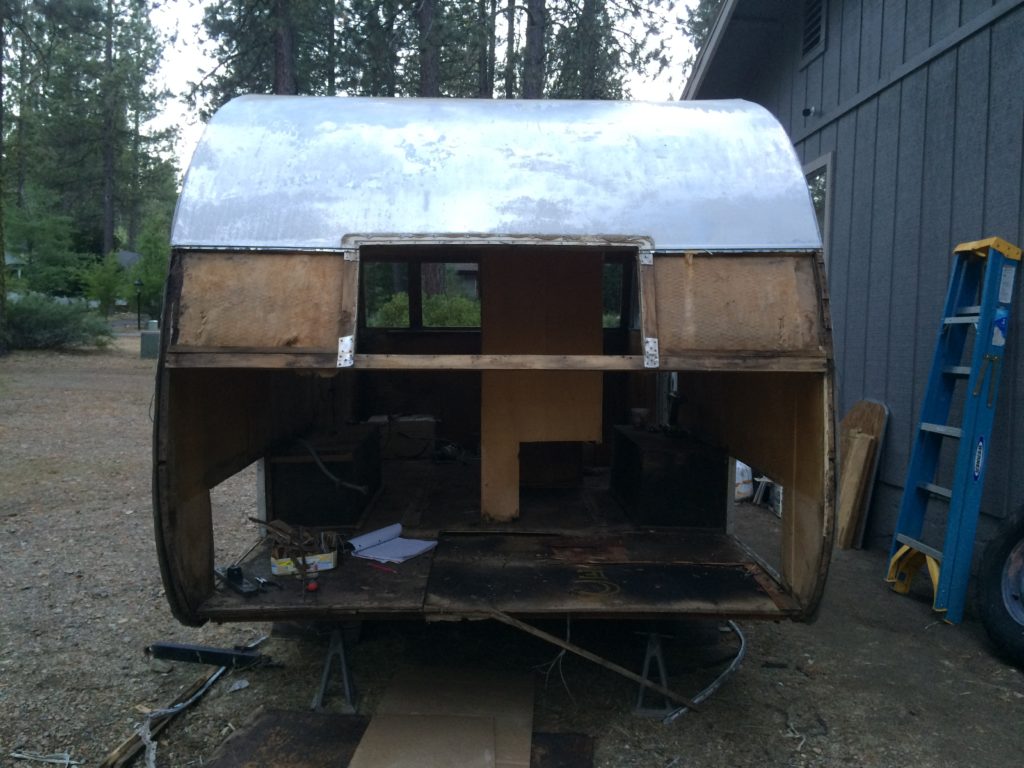
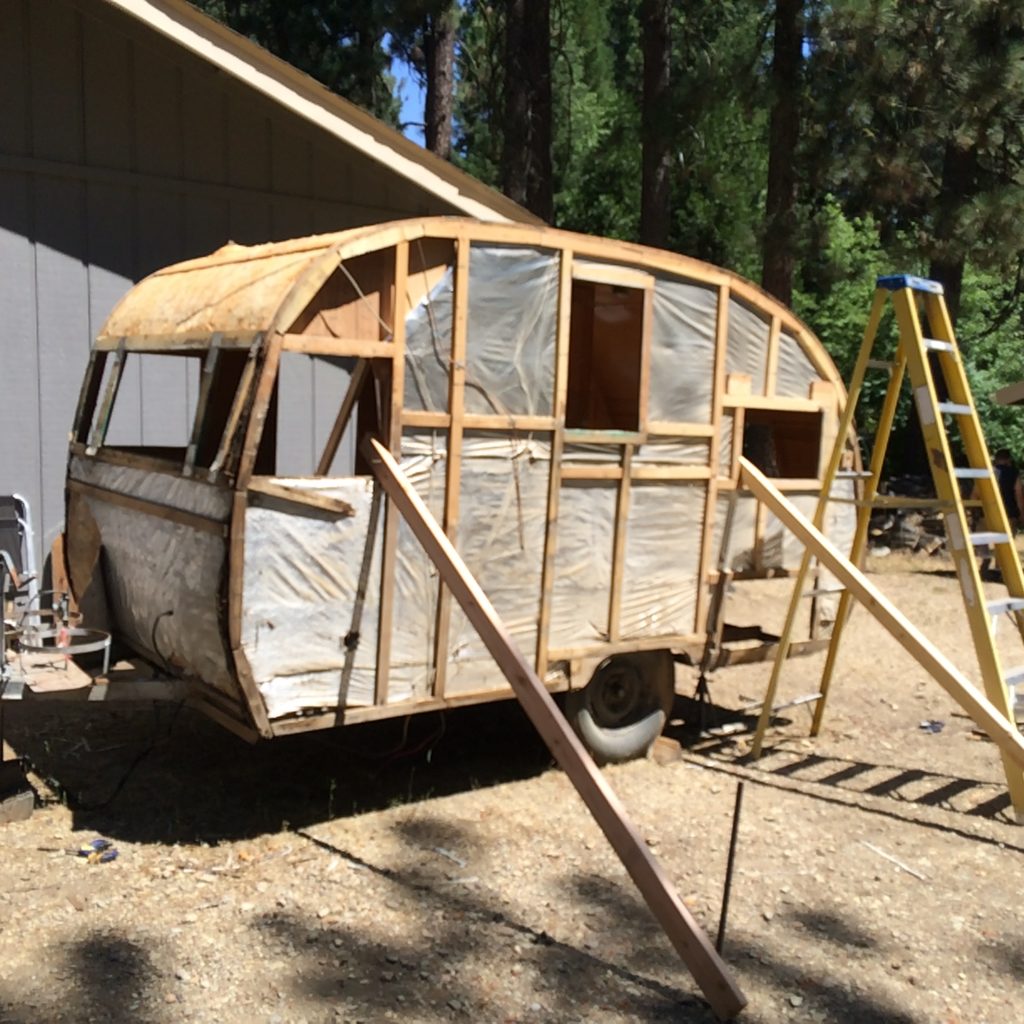
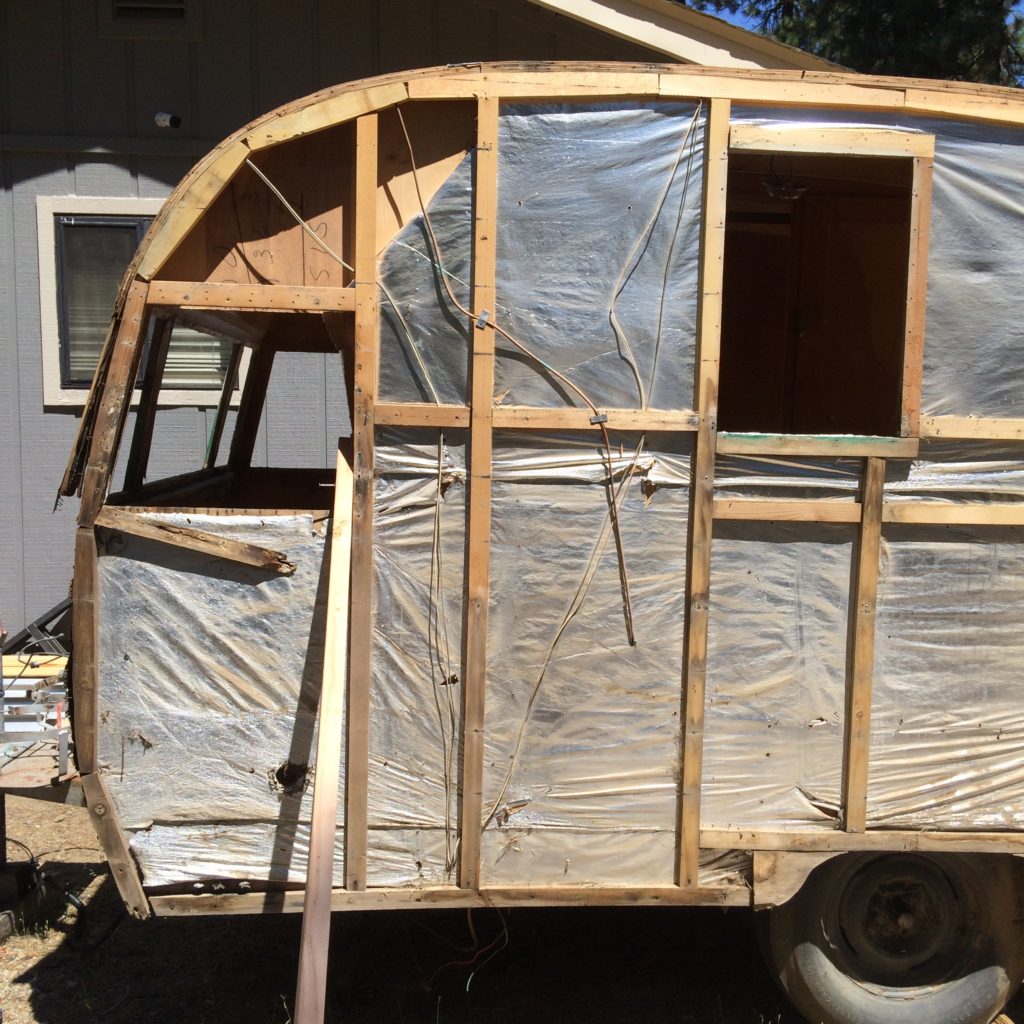
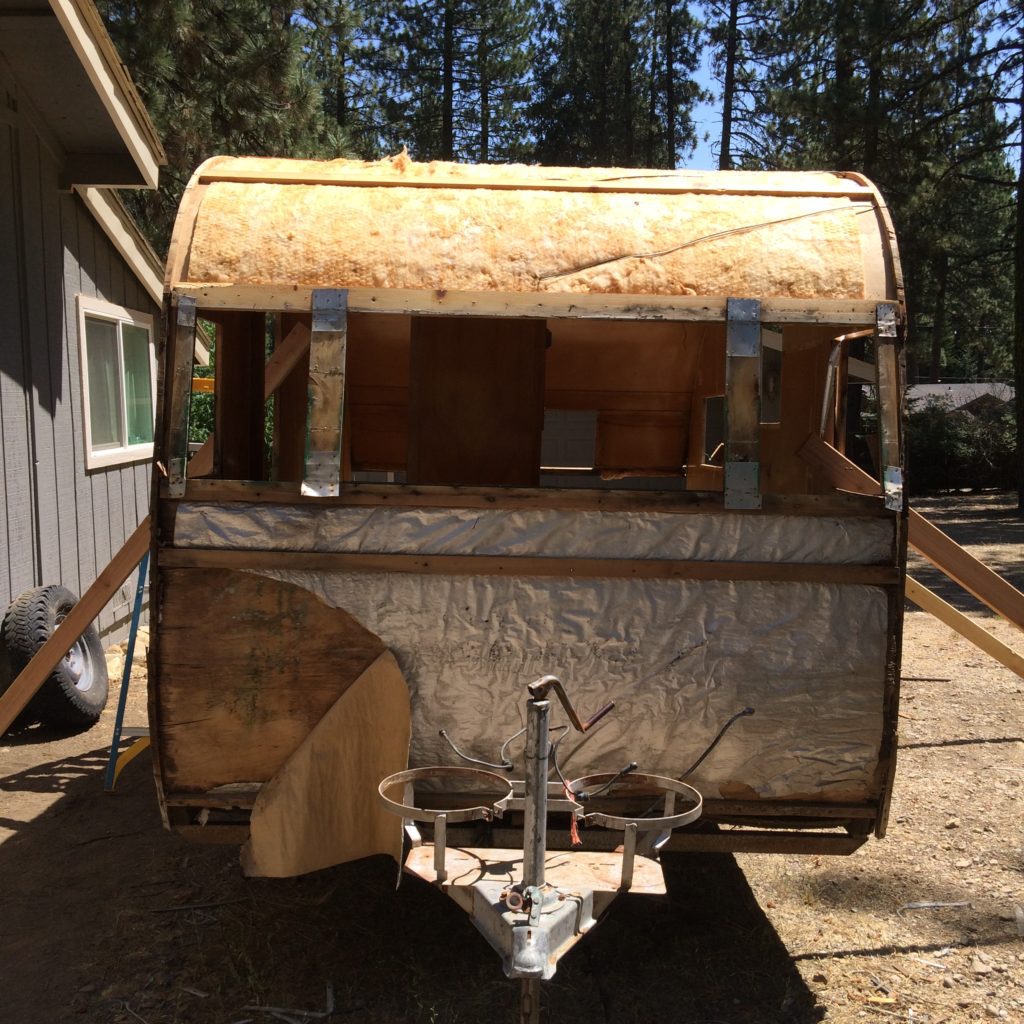
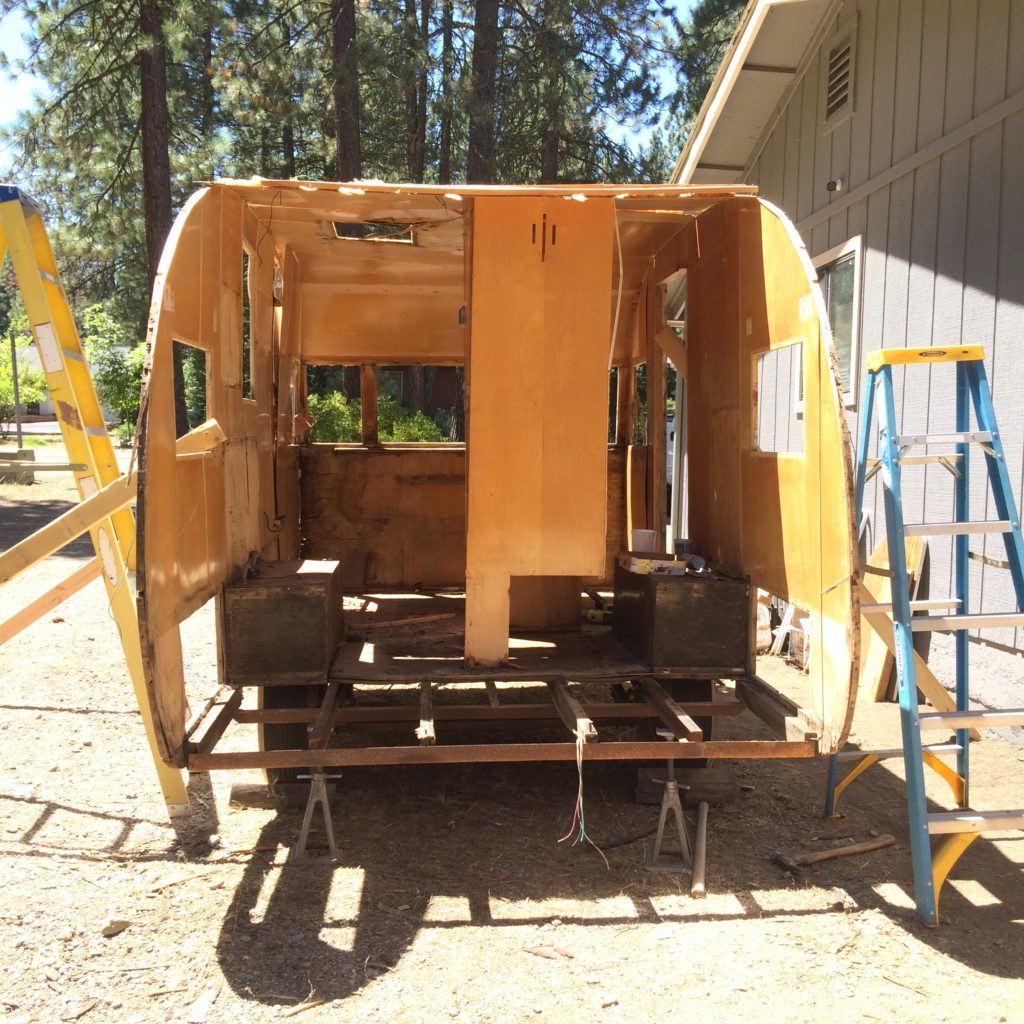
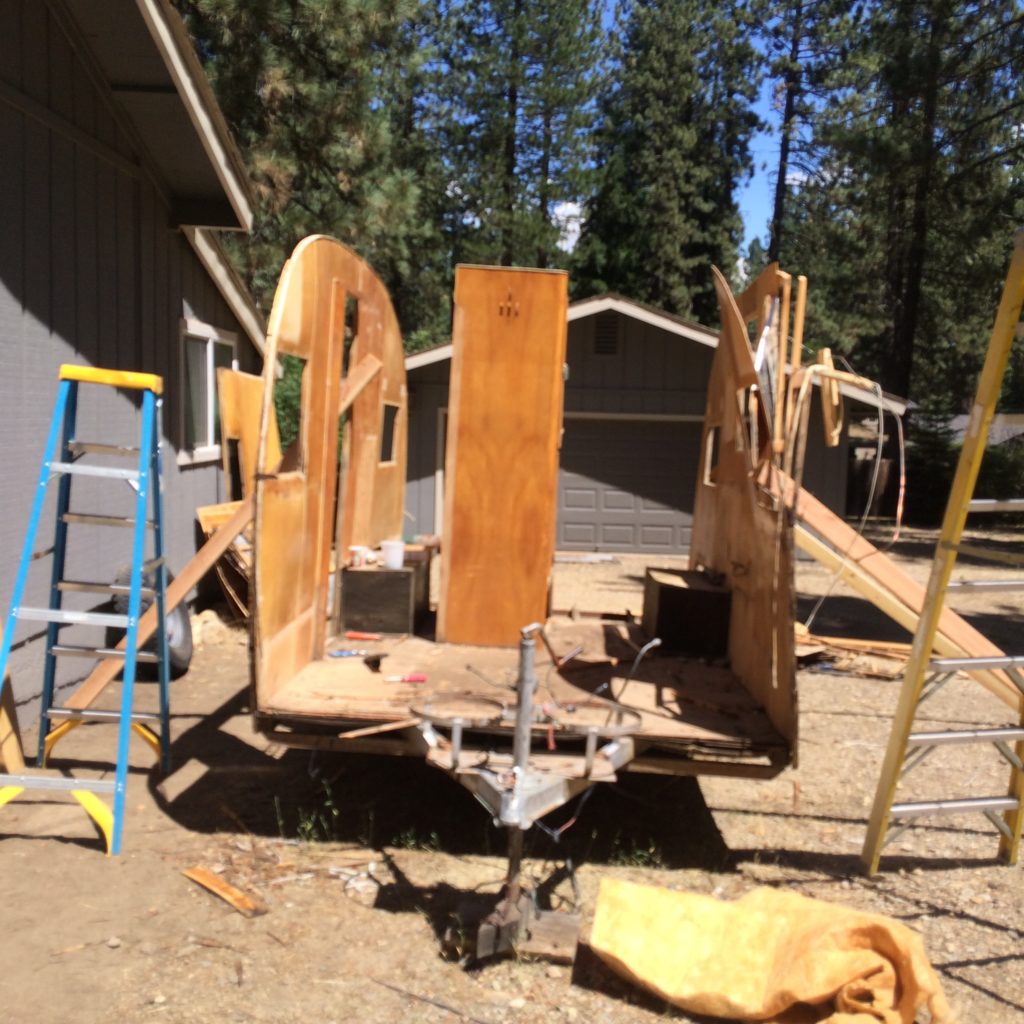
Now the trailer looks a bit NAKED!  The side walls were braced with 2x4s and metal stakes. Then I began to remove the front and rear panels.  Again, lots of screws and nails.

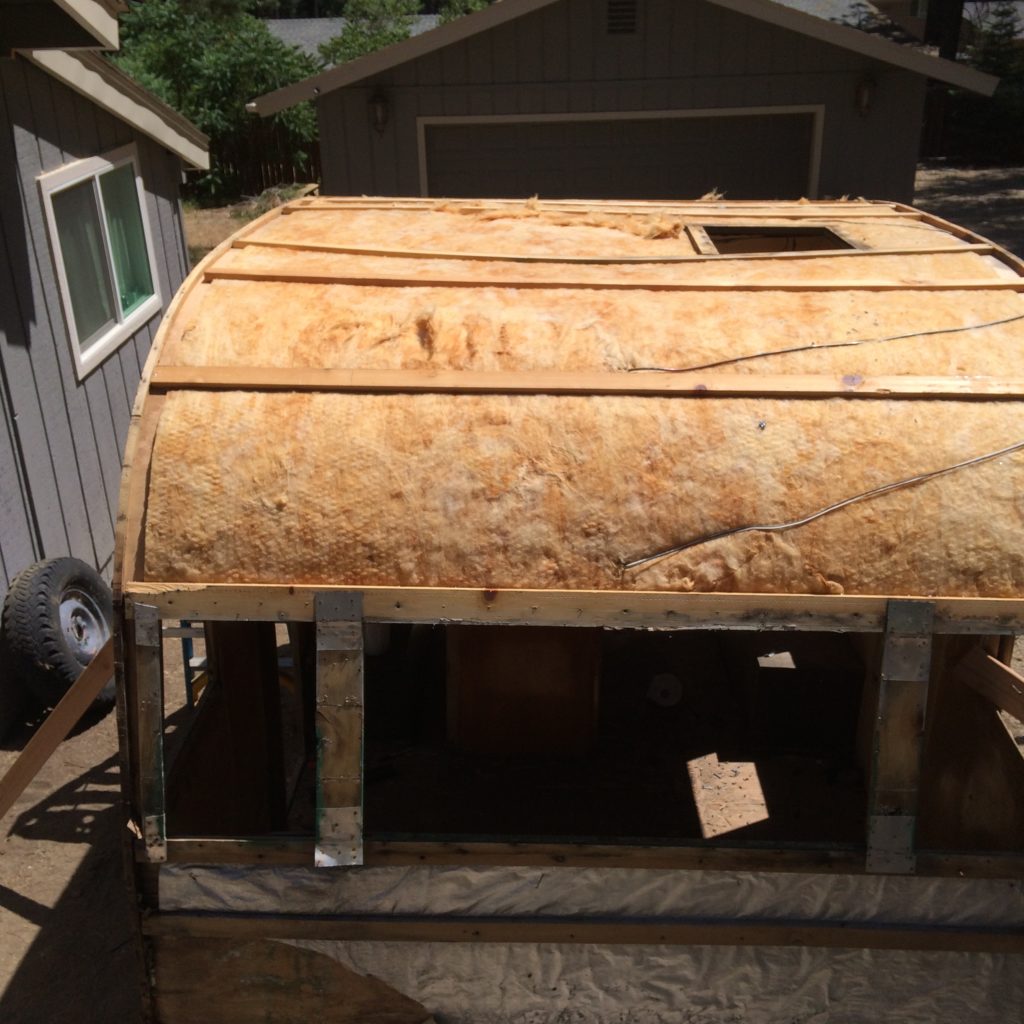
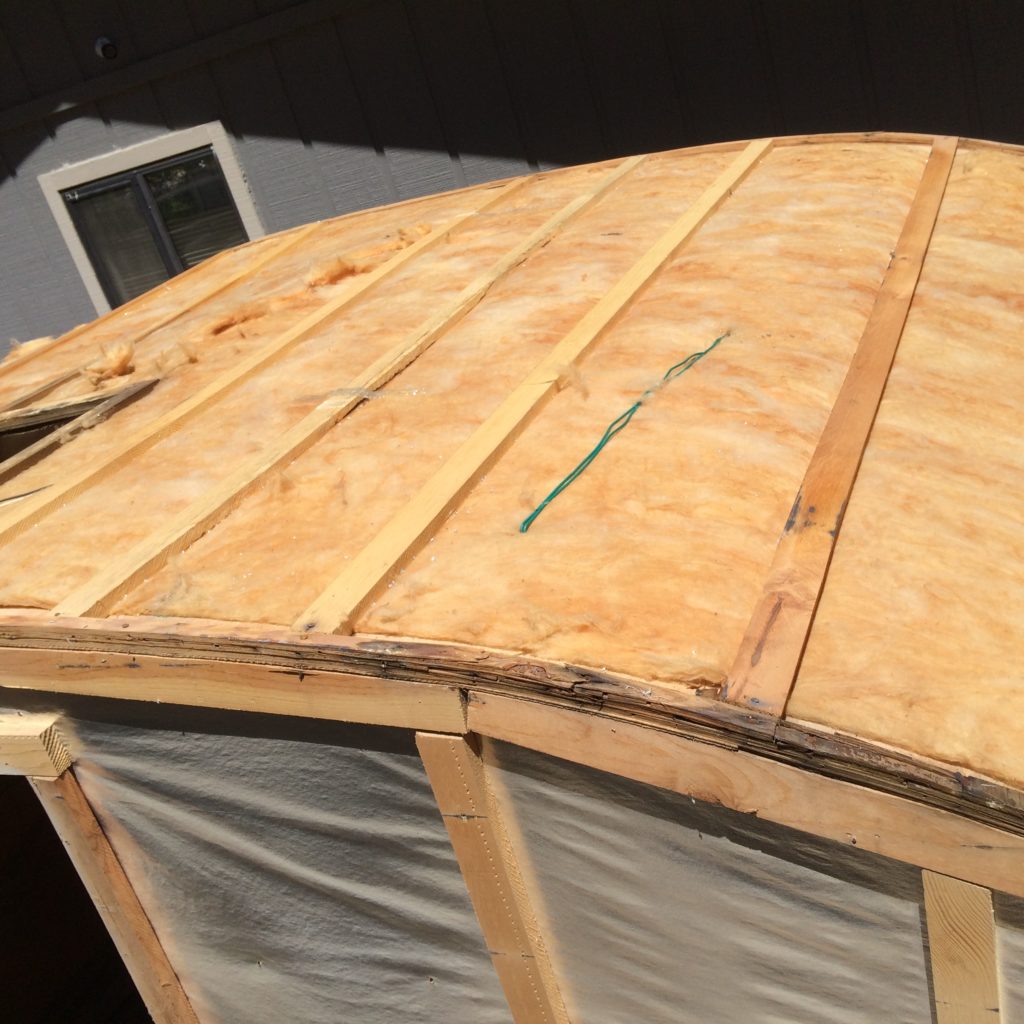
The top sections were taken off along with the insulation and wiring.

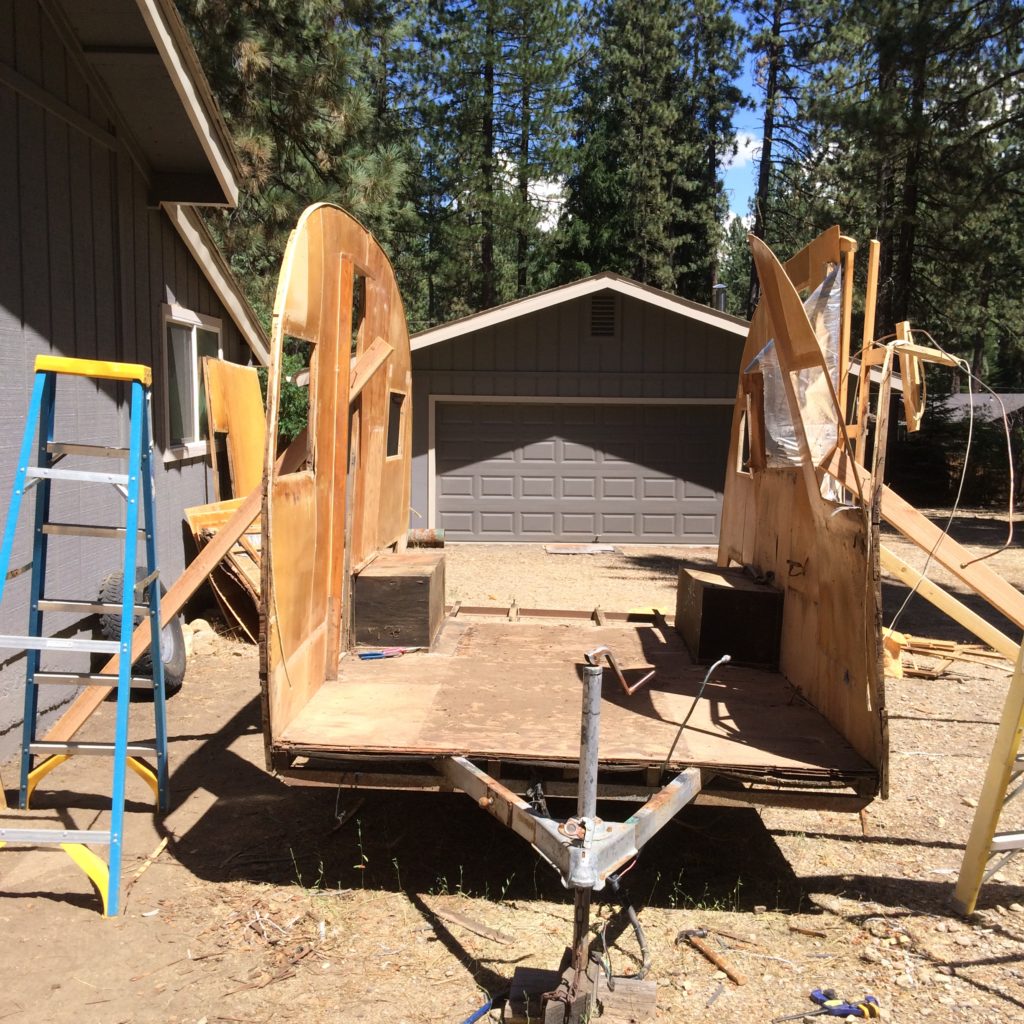
Finally, the sides were unscrewed and lifted off.  This took a few extra hands as well.

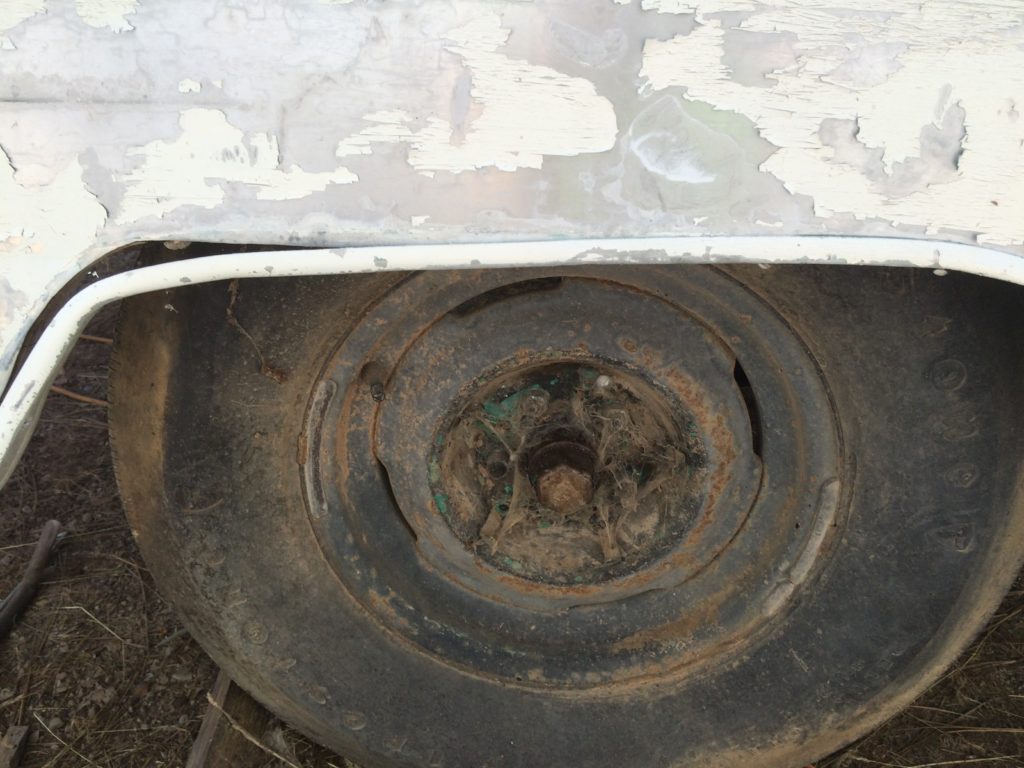
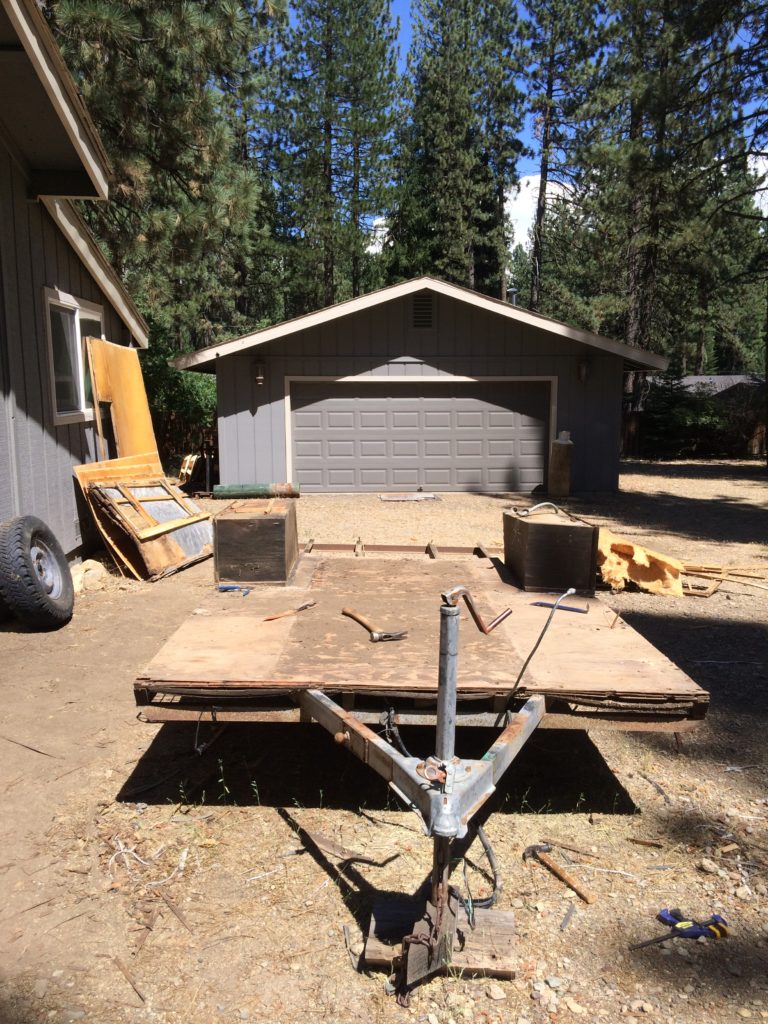
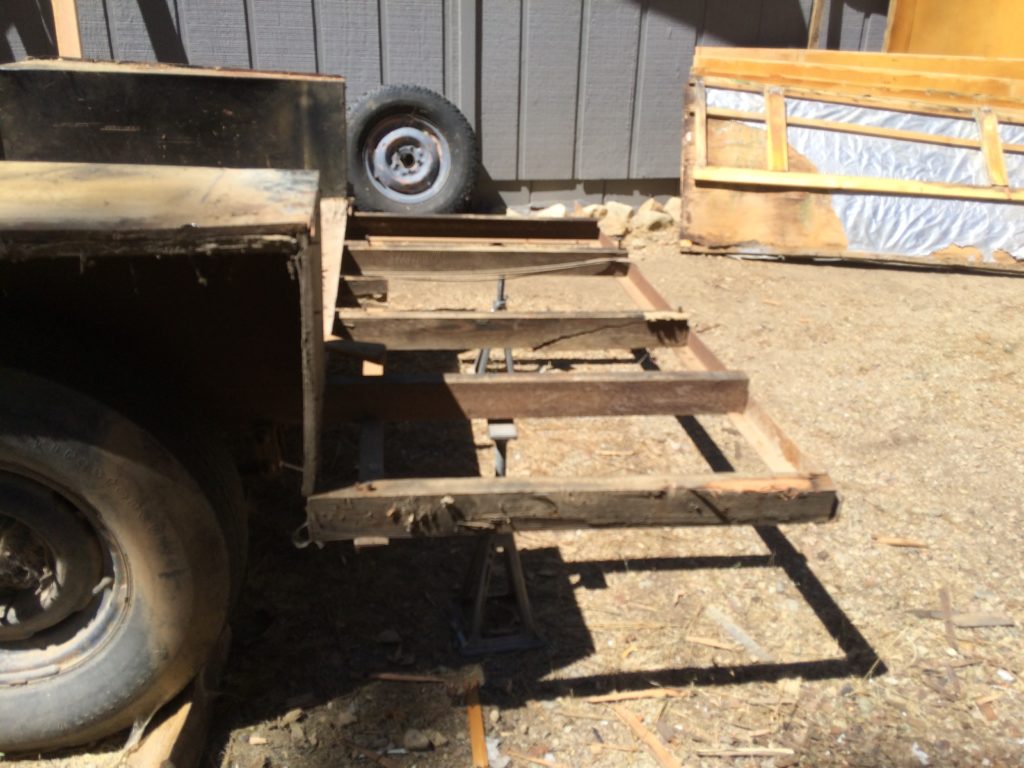
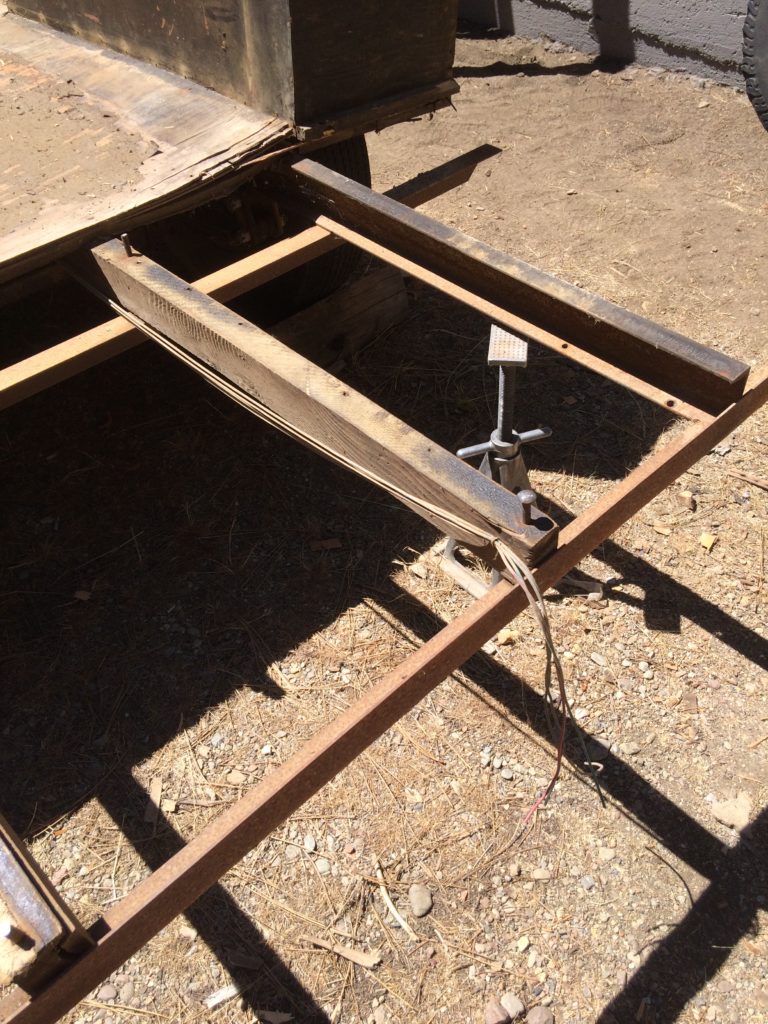
The sub-floor and wheel wells were dismantled and now all that's left is the metal trailer frame.

The neighbors came out and asked where my camper had gone.  I pointed to the flat trailer frame and said, "There it is!"  Their eyes widened and I know they were thinking that I was crazy.  I knew they were skeptical about my ability to rebuild it.  I was a bit skeptical myself. lol.
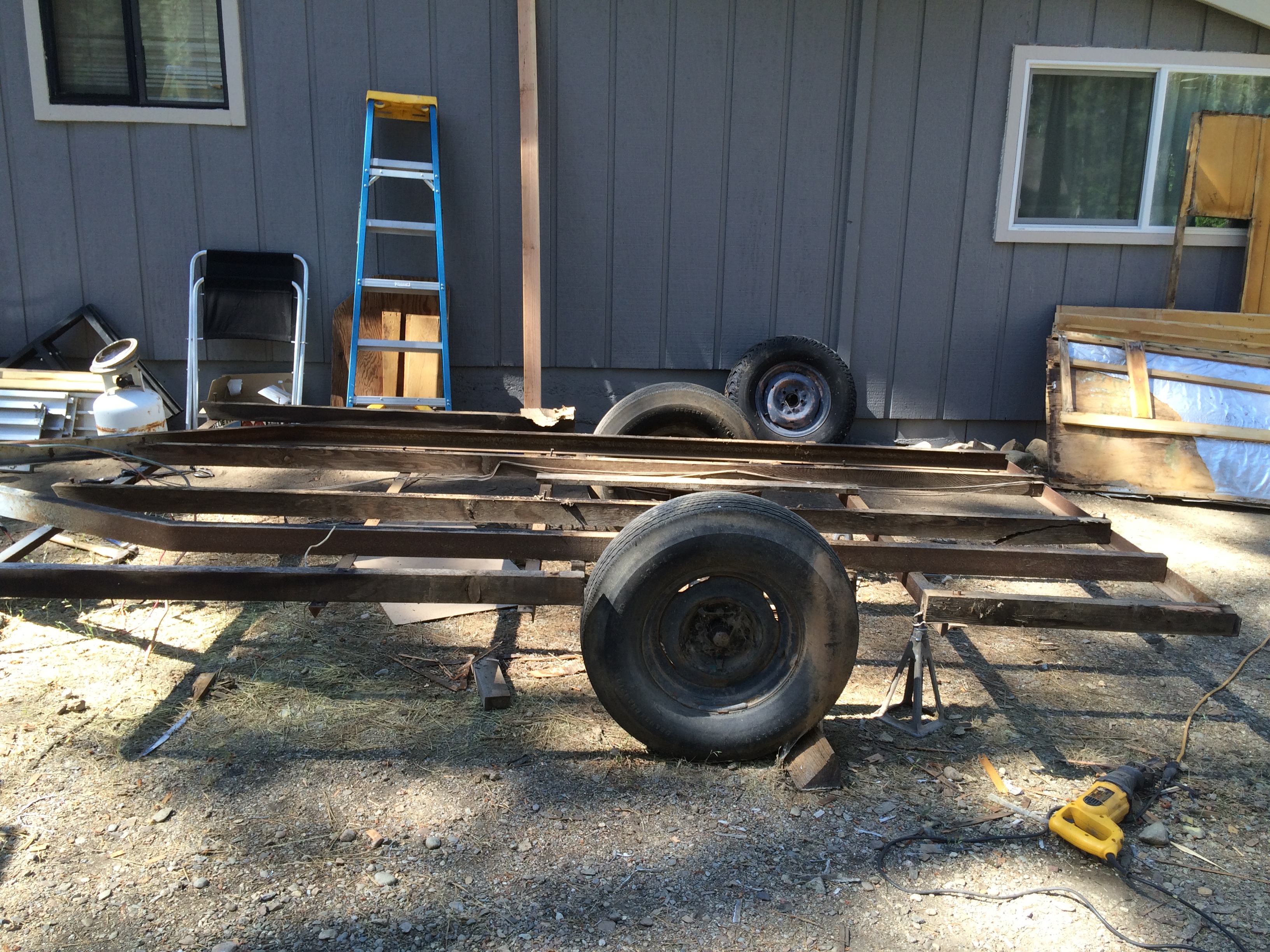
Bare Trailer Frame

Bare Trailer Frame

Deep breaths! Deep breaths! That's what I kept telling myself.  One step at a time...You can do this!

kiss and signature
vintage camper trailer restoration cleaning

How to Safely Clean Out Your Vintage Trailer Find; The Essential Guide

how to safely clean out your vintage camper

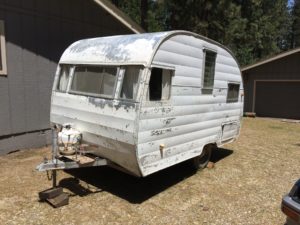
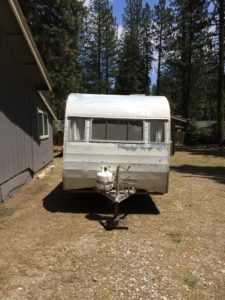
My friend towed the Shasta to my house today. I'm lucky in many ways!

1. Front door delivery is GREAT!

2. The Shasta made it 30 miles on its current tires. They held air so we took a gamble!

3. Lucky to have great friends.

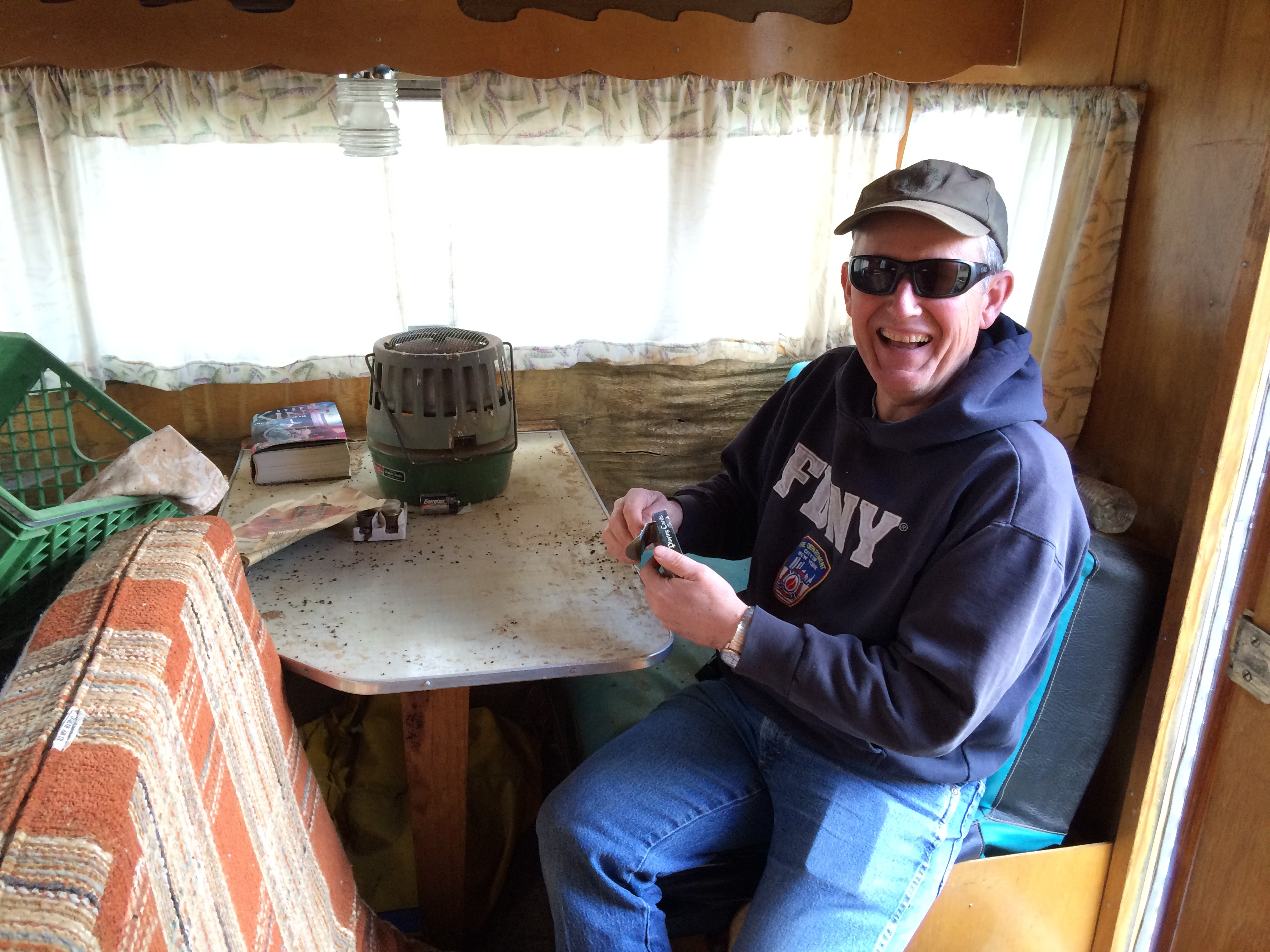
Here's Greg sitting at the dinette. I can't believe he'd touch anything in that camper! Eeeww!

Now to clean it out and access what needs to be done!

AQ phone 7-6-16 139
AQ phone 7-6-16 138

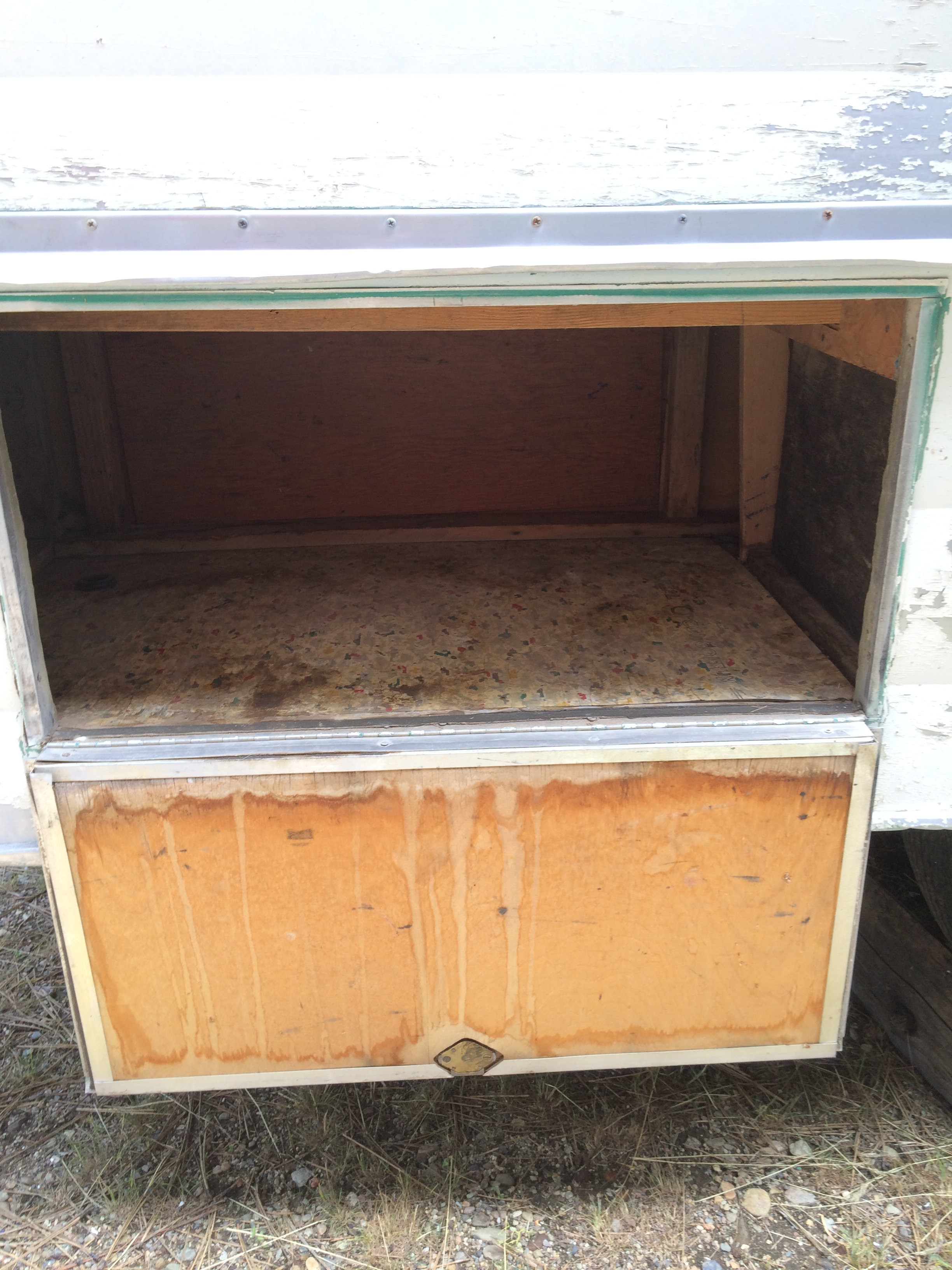
My friend, Greg backed the camper into the side yard and unhitched. Now I had an opportunity to inspect the camper more closely, (Remember the last time I saw it, it was in the middle of a field.) As he opened the outside cargo hatch something caught my eye...A MOUSE!!! And it was living in the camper... and traveled 30 miles...and...and...and...It must go! Fist order of business...evict the current tenants!!!

cargo door

Now the real work/fun begins.

Side Note: This is when you need to start taking photos. It's important to document how things are put together AND how you took them apart. I can't emphasize this enough. Take pics of EVERYTHING! Take them from every angle and every stage.

Ok, here's what you'll need to be safe and healthy.

1. Safety Glasses

2. Work gloves (latex, leather or any work glove will do)

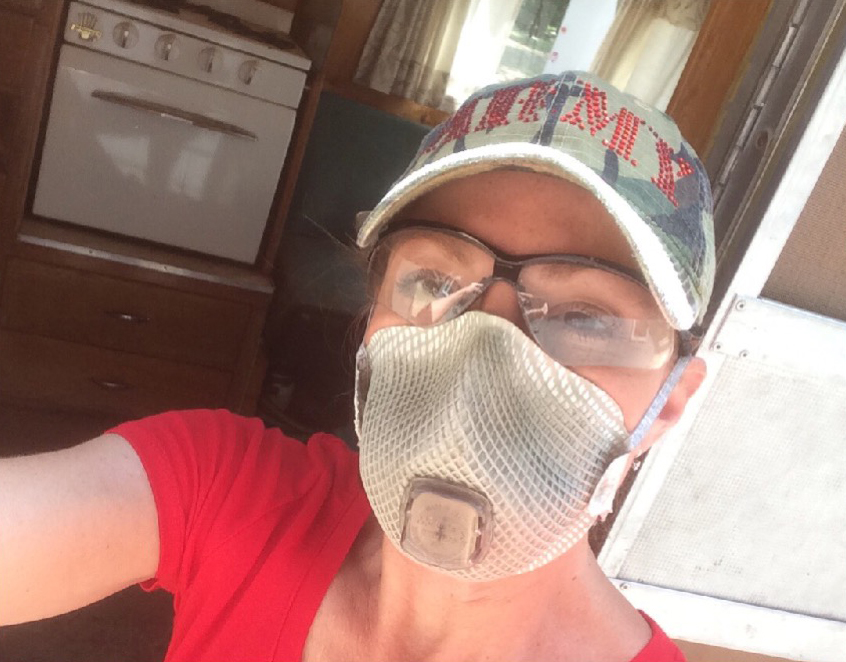
3. Respirator or dust mask. I used the dust mask this day but use a respirator when painting.

4. Bleach/water solution in a spray bottle. (1 part bleach to 10 parts water.)

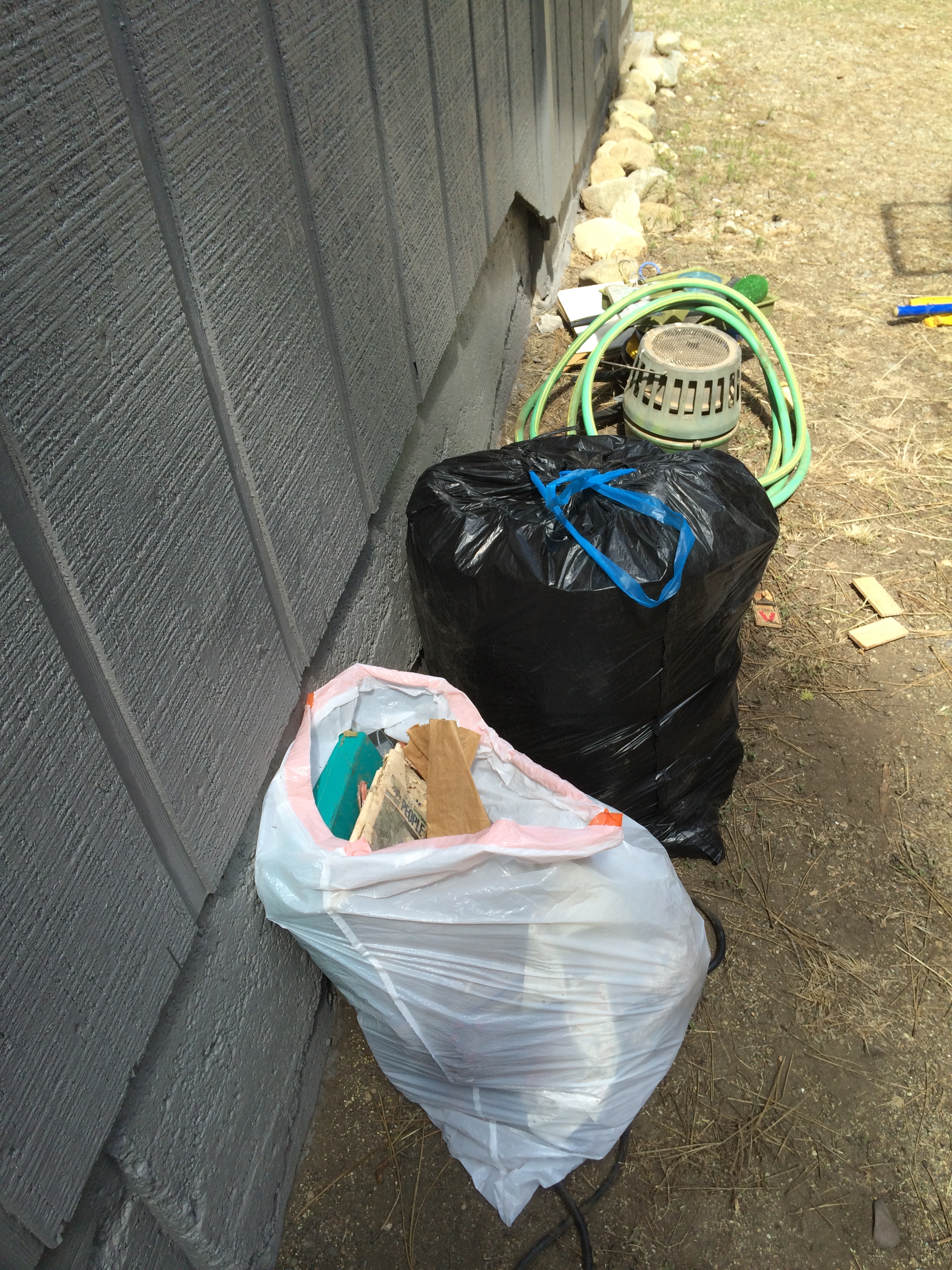
5. Trash bags

wear a respirator


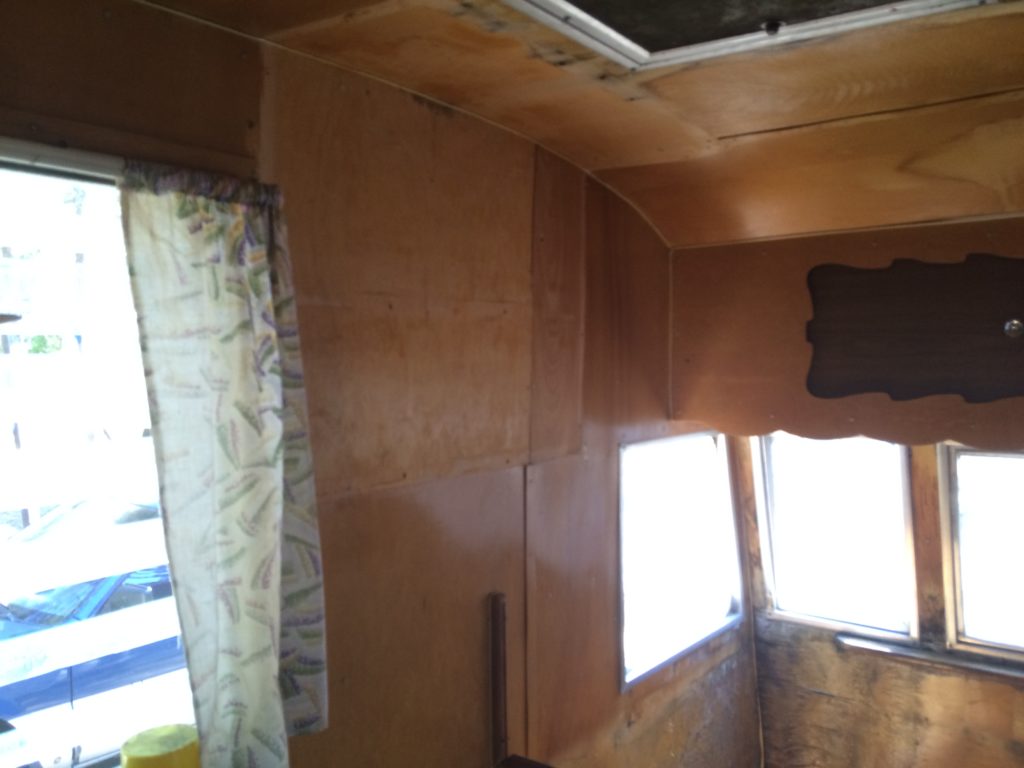
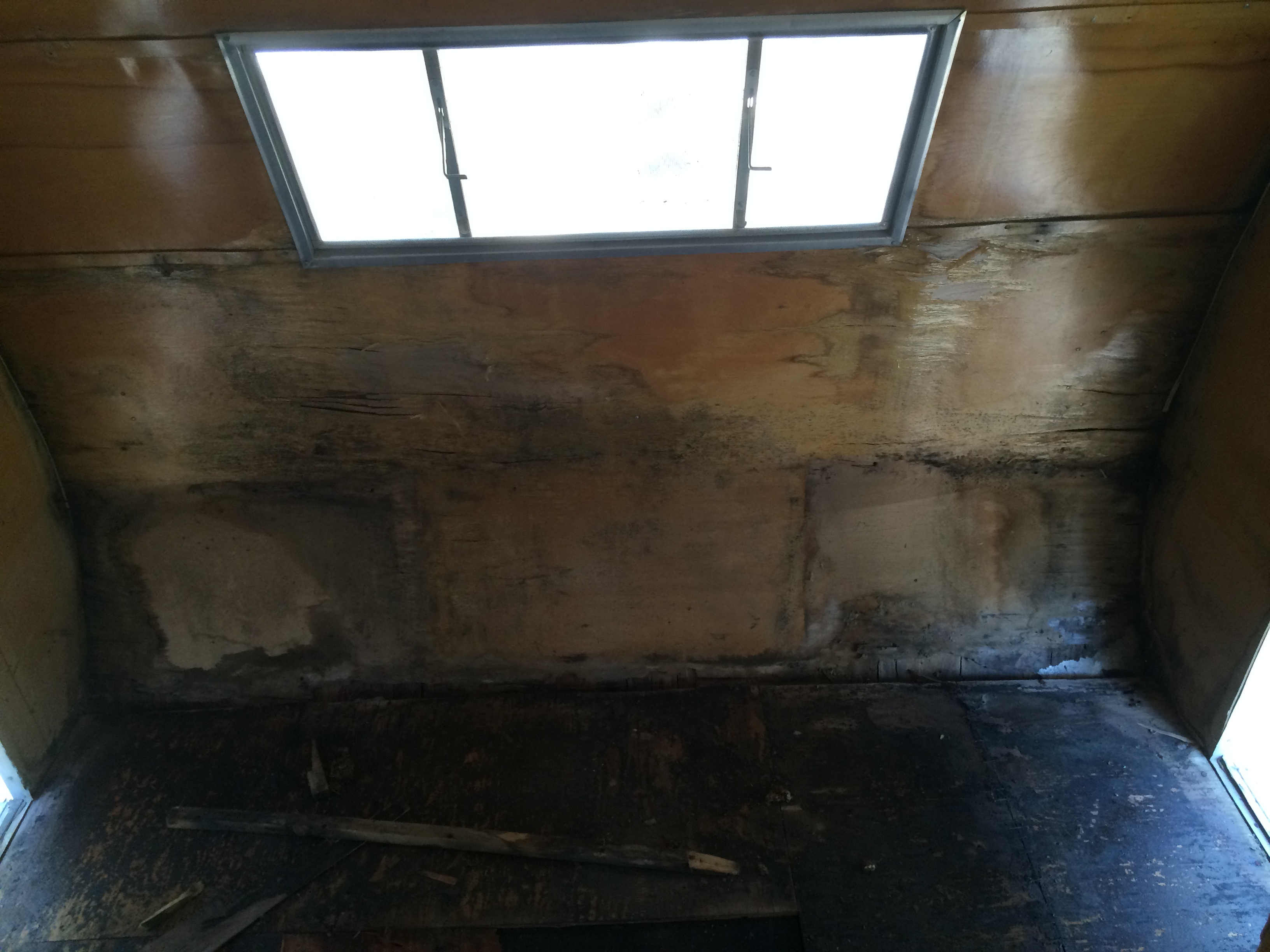
After a thorough inspection, it's clear to see that my gem is in rough shape; The sub-floor is rotten, the walls are crumbling and the smell....oh the smell!

1. Open up all the windows and door and let the camper air out for 30 minutes.

2. Clear out all the trash and put in the trash bags.

3. Spray the bleach/water solution on any droppings you find. Let soak for 5 minutes and clean with paper towels or disposable rags. You can use a wet/dry shop vac for the job just remember that you'll want to clean it out with the bleach/water solution and replace the filter.

4. Clean any surfaces with the bleach/water solution.

Princess propane stove

5. Seal up the trash bags to prevent dust and particles from escaping.

For detailed instructions on rodent clean/up, you can check out the CDC website.
https://www.cdc.gov/rodents/cleaning/index.html

Here are some photos of my cleaning experience. I found several nests. Mice had pulled the stuffing out of the seats and used them to build little cozy homes. (And probably had their babies on them as well. GROSS!) For that reason, I knew I was going to have to replace all the fabric, vinyl and anything else that had a porous surface that bacteria could live on.

Large nest filled with droppings and seeds above the ice box

Mice droppings were everywhere!

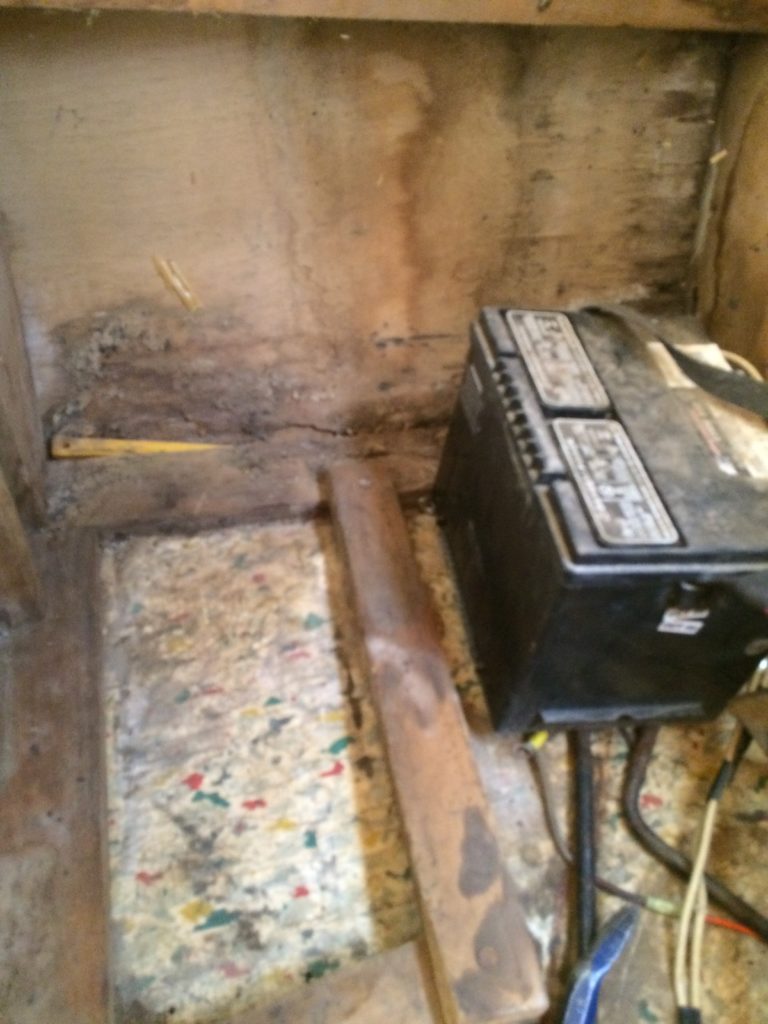
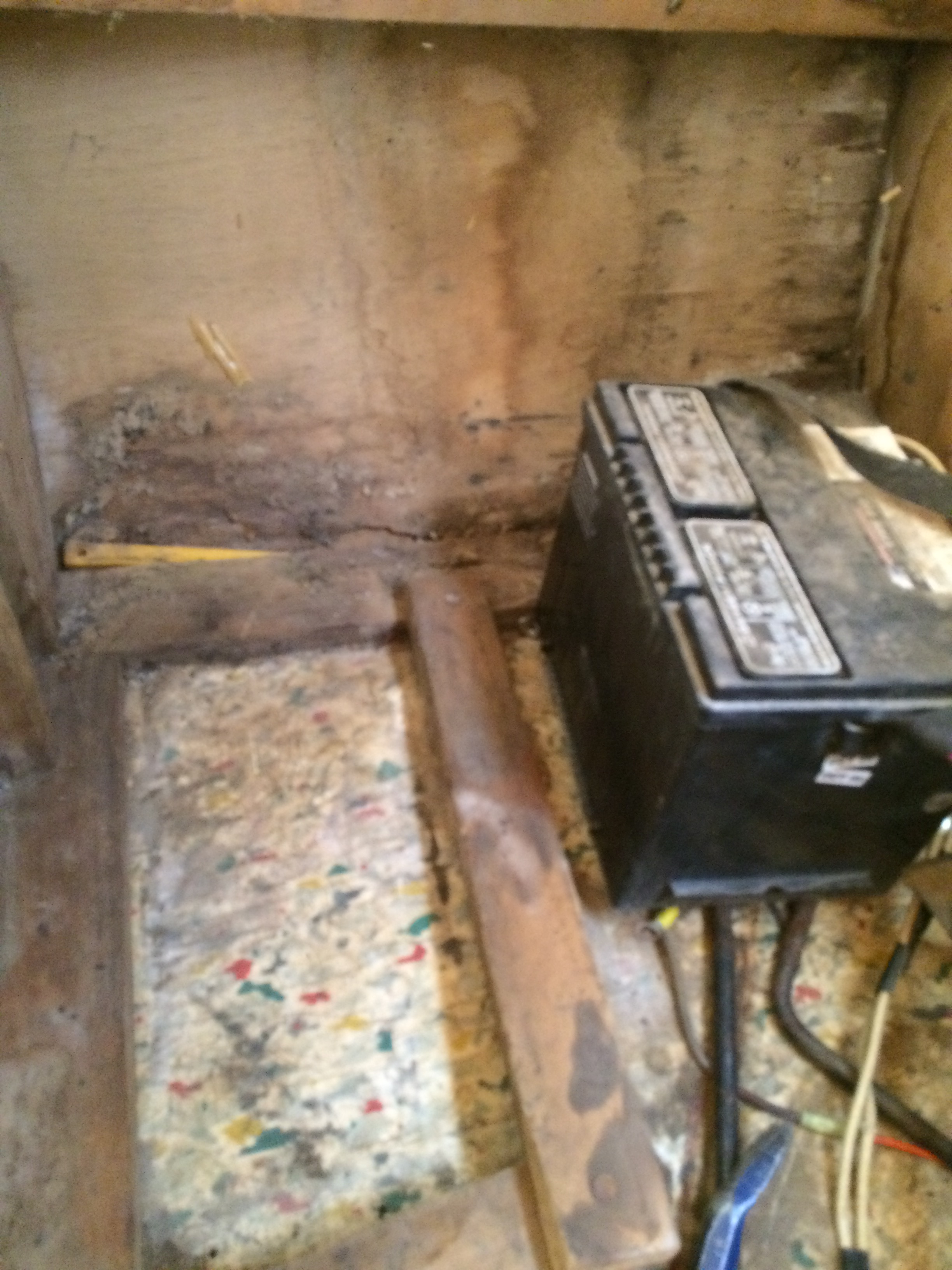
The battery compartment. Rotten wood and mildew.

On another sad note...There's not one piece of paneling that is salvageable. Next order of business...DEMOLITION!

And she needs a name!

kiss and signature

Related Posts

vintage camper trailer restoration paneling

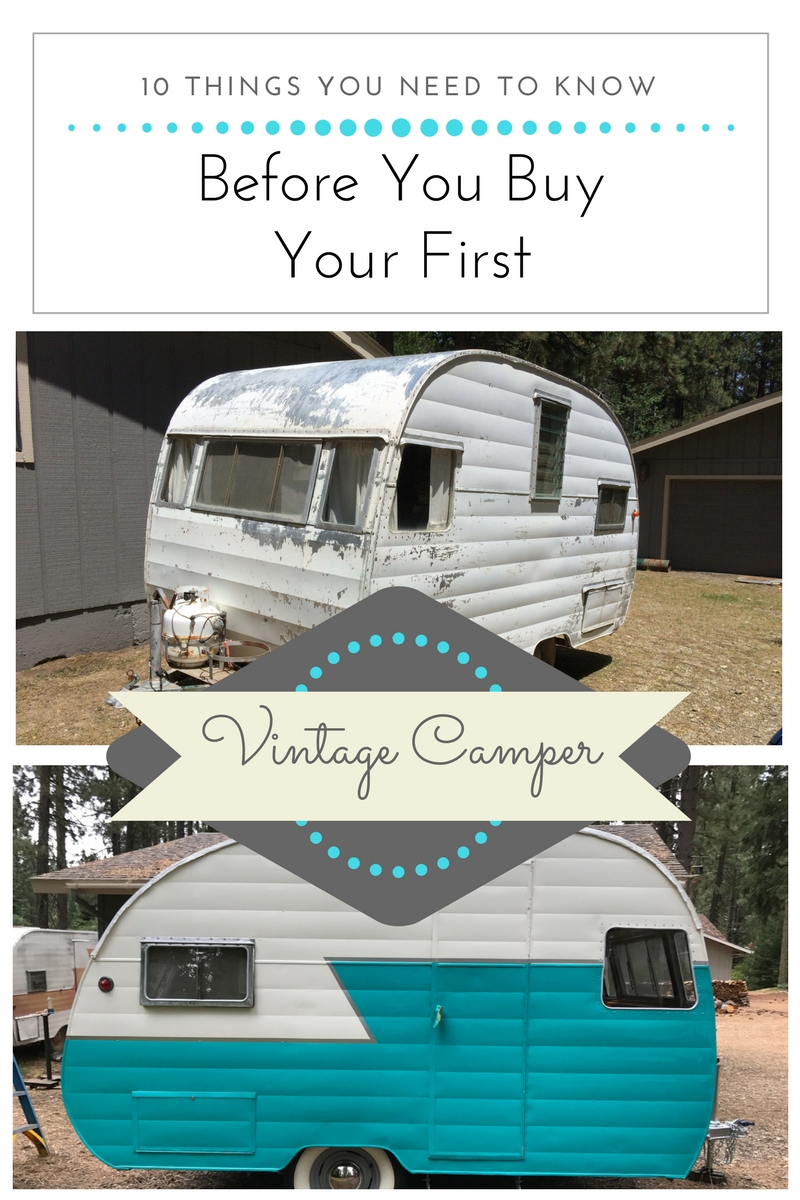
10 Things you need to know before you buy your first vintage camper

before you buy

Have you ever had a conversation with someone and mentioned something you were interested in and that person had that exact same thing you were wanting? Well, that's how my passion (obsession) for vintage campers began. I have been seeing all of these cute campers on Pinterest for several months.  I mentioned my findings to a friend and he said he knew of one that was available.  Within the week I was standing in a field looking at my first camper project.

If you in the market to purchase a vintage camper project download my free shopping checklist. I'll tell you the things to look for and what to ask a potential seller....and it free.  Click Here to download.

SHE IS BEAUTIFUL!!!  Ok...maybe this is the kind of love only a mother has.  To be honest she is in rough shape.  But she's FREE!!  And that's the perfect way to test your skills, right?

I spent a year restoring this 14-foot camper and have learned a lot. That's the whole point of a project like this. I get asked often about how much a vintage camper is worth in its unrestored state. And the answer I always give is, "What's it worth to you?"

This rotten 1956 Shasta was invaluable to me as a learning tool, but maybe you aren't looking for a complete "frame-up" restoration. (Yes, I took it down all the way to the bare metal trailer frame.)

See my post on Tips and tricks to dismantle your vintage camper.

Here are some things to look for when shopping for a vintage camper project. ( In no particular order)   Click Here to download my free vintage camper shopping checklist.

1. Does it have a title?
2. Consider the age of the camper.
3. Does it have character and desirability?
4. Size; How big will your project be?
5. Is it structurally sound? (framing)
6. Do the systems work? (Electric, Propane, Water)
7. Is it water tight?
8. What condition is the undercarriage in? (leaf springs, brakes, tires, bearings, tow-ability, etc.)
9. What condition is the exterior siding in?
10. How complete is it? (windows, appliances, light fixtures, hardware, cabinetry, etc.)


  • 1. Does it have a title?

    It's much easier to deal with a camper that has a clean title. I really don't like to deal with any other situation. Each state has its own set of rules when it comes to this so I have little advice except to do your research. I don't recommend staring any work on a camper unless you've secured the title in your name.

  • 2. Age of the camper

    This is a question of preference and opinion. There is some debate on how old a camper has to be in order to be considered "Vintage". Some enthusiast says 1973 is the cut-off while others will accept camper up until the late 1970s. If you plan on belonging to a specific vintage trailer club, then you might want to research their specific guidelines. Other than that, you should use your own judgment....If you like it, then age doesn't' matter.

  • 3. Does it have character and desirability?

    Again...do you like it? Many vintage camper models have a large following. There are websites and social media sites devoted to them. The more popular the make and model is, the more you can sell your restored camper for. But...sometimes that means you'll pay more for the unrestored camper as well. The important thing is to buy what you like, have a vision for the completed project and have fun with it.

  • 4. Size (How big is the camper/trailer?)

    Consider the scope of your potential project. I don't recommend starting off with a 24-foot aluminum camper that needs a complete frame-up restoration. You could get discouraged and overwhelmed before you even start. Start with a small, 14-16 foot trailer. Maybe consider one that doesn't have a bathroom so you don't have to deal with a black-water tank for your first project. Just a thought....

  • 5. Is it structurally sound?

    Look for bowing sides or sagging roof lines. This is a good indication that a piece of the framing has been compromised. Don't get me wrong, it can be fixed, just know that you'll be taking the aluminum siding off to access the damage. By the way, if the siding is off you might as well access the electrical and insulation. 🙂

  • 6. Do the systems work?

    Speaking of electrical..... Maybe you are very comfortable with this but I wasn't. I learned A LOT! If running or fixing electrical systems is your thing then you're my hero! Remember that most campers have 12v and 110 power along with a trailer tail light system. You'll need the tail/brake lights to work when towing your project home. (Or you can put your camper on an auto trailer.)
    Propane lines should be tested with leak detector fluid before using them long term.
    Water systems are fairly simple but I can tell you that I went to the hardware store more times when installing mine than any other thing. Typically a new faucet and/or pump may be required.

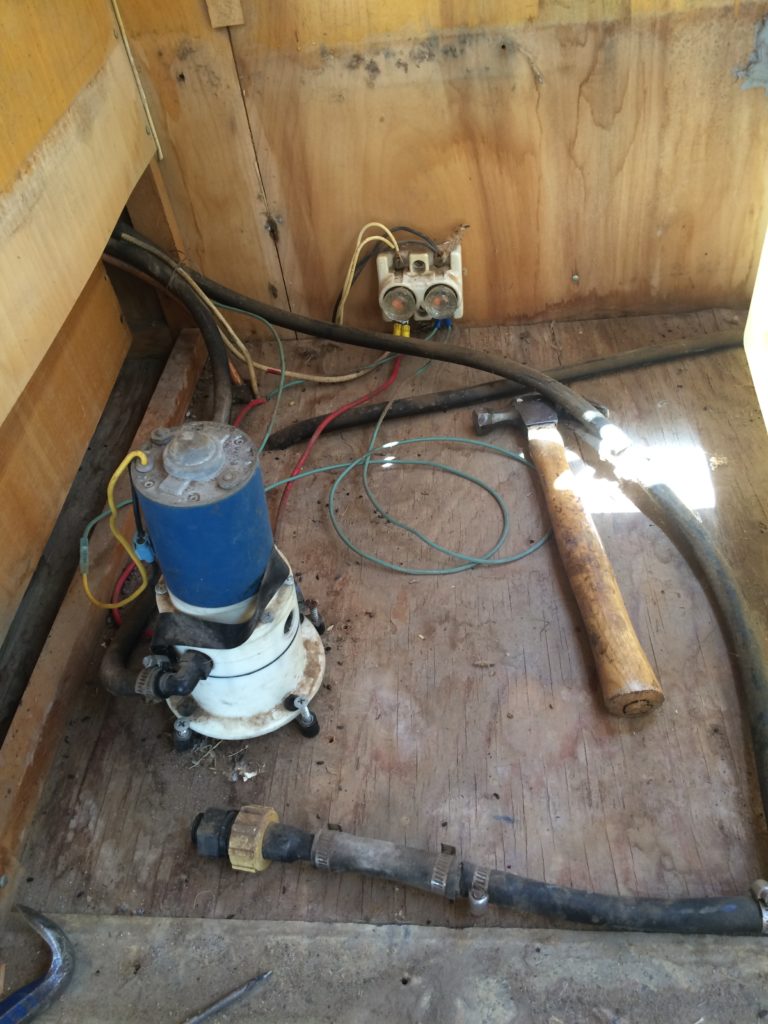
    Water pump and fuses. I'm going to need to upgrade that.

  • 7. Is it water tight?

    Most of them are NOT! If the wood paneling has watermarks, discoloration or delamination then it's been wet. This happens most frequently around the roof vent, windows and corners. The good news is the wood can be repaired. But first, you need to stop the leak.

  • 8. What conditon is the undercarriage in?

    Check for broken leaf springs. (Yep, you'll have to put your head under there and shine a flashlight on them.) Leaf-springs can be replaced but it's not something I'd like to tackle.
    The same goes for brakes. Lots of people do them but I'd probably take it to a repair shop.
    Most of the time tires will need to be replaced. Trailer tires are only good for 10 years regardless of their wear.
    Wheel bearings are easy to replace or repack. There are lots of YouTube videos on how to do this. Pretty simple.
    After you access the lights, tires, and brakes you'll have to decide if you can safely tow the camper to your project site. Maybe putting it on an auto trailer a better option.

  • 9. What condition is the exterior siding in?

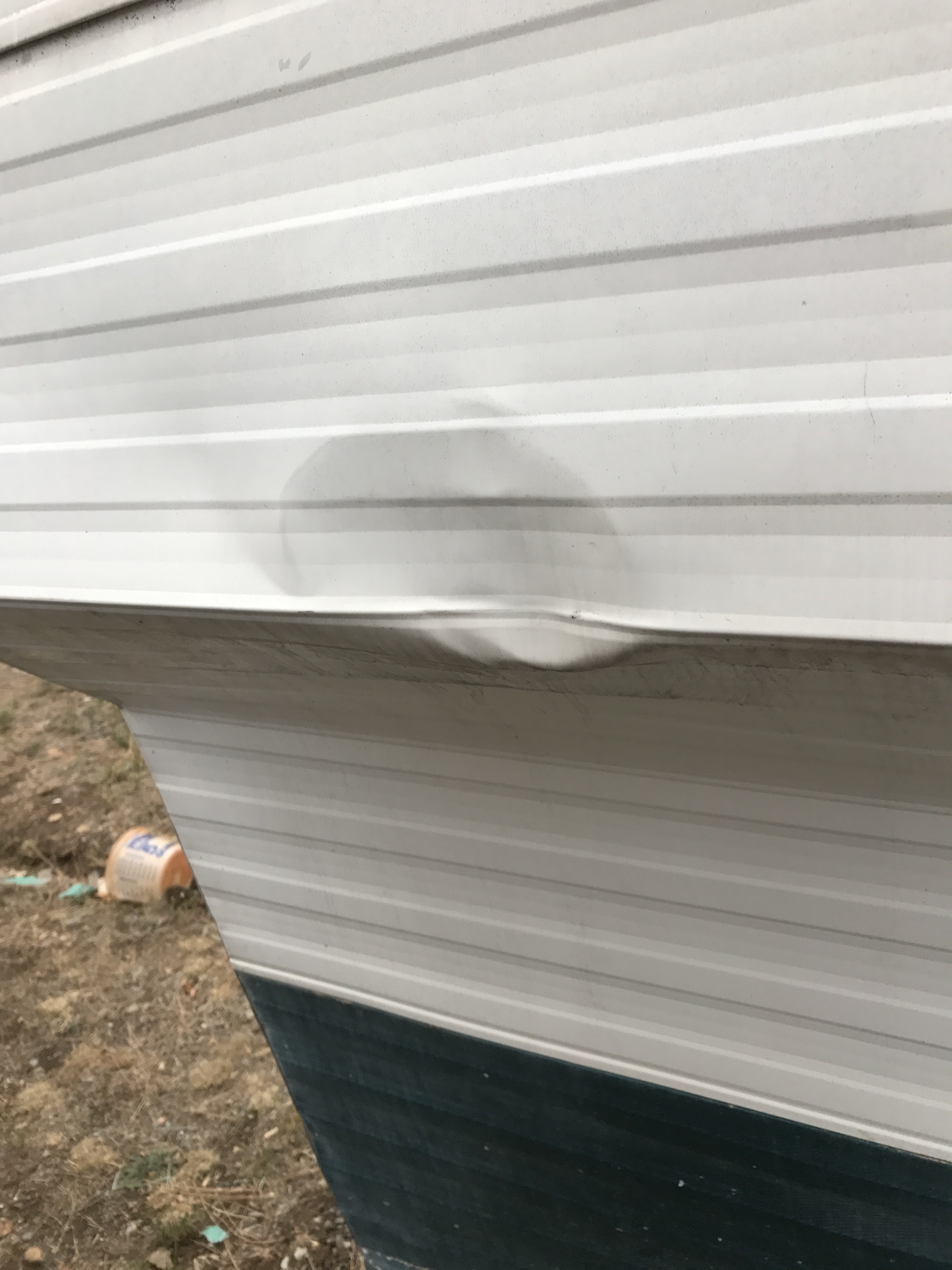
    Check for dents, damage, and missing siding. You can still purchase siding for vintage campers and some repairs are possible. Bondo and a lot of sanding can make siding look better but holes WILL lead to water damage if you don't repair them.

  • 10. How complete is it?

    There are lots of sites that sell vintage trailer parts and appliances so it's possible to find replacements, but a complete camper will save you $$.

After you've examined the potential project it's important to think about how many of the above list items you are capable of doing yourself. I've learned a lot by reading, watching YouTube videos, and consulting with friends in the construction industry. You just have to be willing to learn and possibly fail a few times until you get it right...I know I did!

How much of the work can you do yourself? Parts and supplies add up quickly. Is this project for your own personal enjoyment or are your trying to sell it for a profit?

The bottom line is....What's it worth to you?

Remember that a free camper could cost your THOUSANDS of dollars!! ...and that's ok as long as you are aware of what you're getting into.

If you in the market to purchase a vintage camper project download my free shopping checklist. I'll tell you the things to look for and what to ask a potential seller....and it free.  Click Here to download.

kiss and signature

Related Posts